

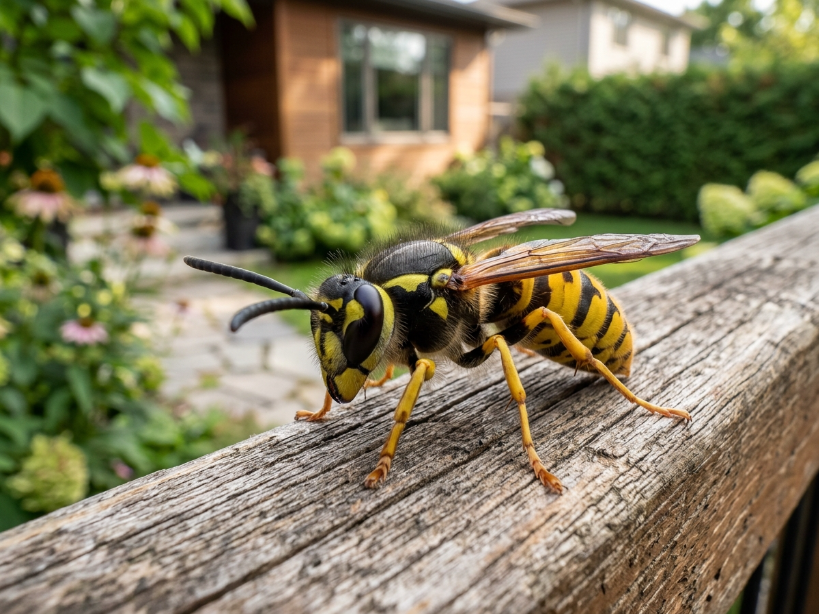
What Is a Wasp?
A wasp is a stinging insect belonging to the family Vespidae, within the order Hymenoptera, which also includes bees and ants. Most wasps homeowners encounter in Canada are social insects, living in organized colonies with a queen and worker castes, though a number of solitary species exist as well, building small individual nests rather than a shared colony.
In our experience, most homeowners lump every stinging insect into one category, but the differences matter quite a bit. Where a wasp builds its nest, how aggressively it defends that nest, and how the colony behaves through the season all depend heavily on which species you’re actually dealing with.
What Do Wasps Look Like? Appearance and Identification
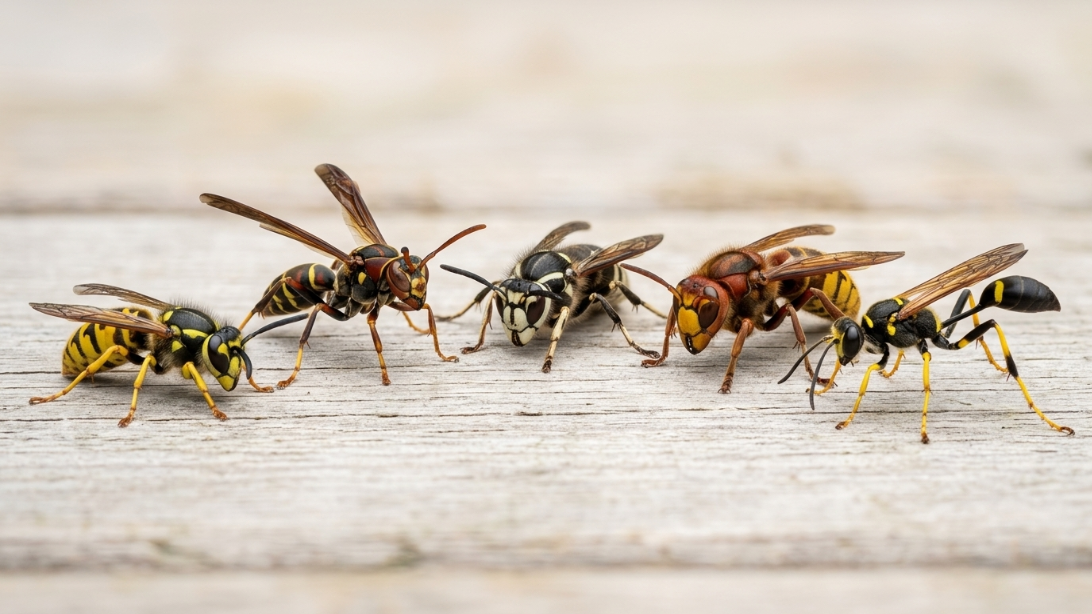
Wasps generally have a smooth, slender body with a narrow, pinched waist, unlike the fuzzy, rounder bodies of bees. Most species common in Ontario are black and yellow or black and white, ranging from about 1.2 to 2.5 cm long depending on the species. Unlike bees, wasps are largely hairless, which is one of the quickest visual cues for telling the two apart at a glance.
Common Wasp Species in Canada
A handful of species make up the vast majority of wasp activity homeowners deal with across Ontario.
- Yellow jacket: Roughly 1.2 to 2.5 cm long, with bold yellow-and-black banding and a bullet-shaped body. Yellow jackets are the species most often mistaken for bees, though they’re sleeker, hairless, and considerably more aggressive around food. They nest underground, in wall voids, or in other enclosed cavities, and a mature colony can grow into the thousands of workers by late summer.
- Paper wasp: Slightly longer-bodied with legs that dangle visibly during flight, generally brown with yellow markings. Paper wasps build open, umbrella-shaped nests under eaves, deck railings, and overhangs. They’re less aggressive than yellow jackets and typically only sting if the nest itself is directly disturbed.
- Bald-faced hornet: Despite the name, this species is actually a type of yellow jacket rather than a true hornet. Larger than a typical yellow jacket, black with distinctive white markings on the face and abdomen, bald-faced hornets build the large, grey, football-shaped paper nests often seen hanging from tree branches or eaves, which can house hundreds of workers by the end of summer.
- Mud dauber: A solitary wasp, long and slender with a distinctly narrow waist, often steel blue-black or black with yellow markings. Mud daubers build small, tube-shaped nests out of mud on walls, ceilings, and under decks, and are considered non-aggressive, rarely stinging even when approached.
- European hornet: The only true hornet species established in Canada, found in wooded areas of southern Ontario and Quebec. Larger than a yellow jacket with reddish markings, European hornets nest in hollow trees or wall cavities and are less aggressive than yellow jackets unless their nest is directly disturbed.
One mistake we see repeatedly is a homeowner assuming any black-and-white wasp with a football-shaped nest is dangerous simply because of its size. Bald-faced hornets are certainly capable of a painful, repeated sting if the nest is disturbed, but like most wasp species, they’re focused on defending the colony rather than seeking people out.
Paper Wasp vs. Yellow Jacket: Key Differences
Because these two species get confused constantly, a few clear distinctions help sort them out:
- Paper wasps build open, exposed nests resembling an upside-down umbrella; yellow jackets build enclosed nests, usually underground or inside a void, with only the entrance visible
- Paper wasps have visibly dangling legs during flight; yellow jackets fly with a more compact, direct pattern
- Paper wasp colonies are generally smaller, often numbering dozens to a couple hundred; yellow jacket colonies can reach into the thousands by late summer
- Paper wasps are less defensive unless the nest is touched directly; yellow jackets are considerably more likely to sting with minimal provocation, particularly around food and garbage
Where Do Wasps Build Nests? Habitat
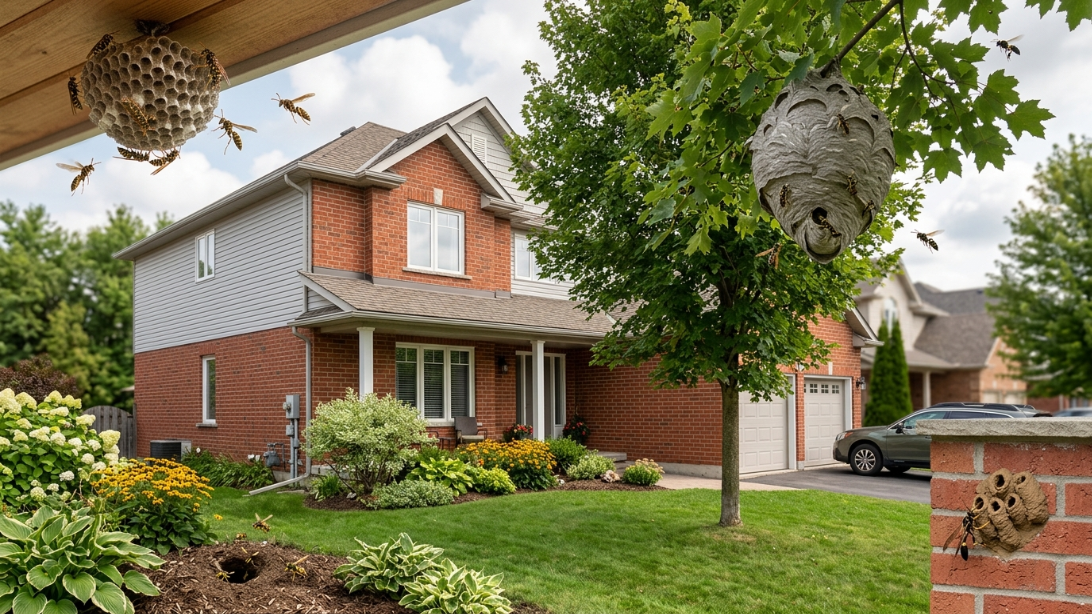
Nest location depends heavily on species, and knowing where to look is often the fastest way to identify what you’re dealing with.
- Under deck and porch railings, and inside soffits and roof eaves
- Wall voids around vents, utility penetrations, and siding gaps
- Hanging from tree branches and shrubs, often hidden until leaves drop in the fall
- Underground, frequently in abandoned rodent burrows or loose soil along lawn edges
- Inside sheds, garages, BBQ covers, unused planters, and other undisturbed outdoor structures
This changes depending on the species. Yellow jackets favour enclosed cavities, whether underground or inside a wall void, which makes their nests far easier to disturb accidentally while mowing the lawn or doing yard work. Bald-faced hornets and paper wasps build exposed, visible nests, which at least gives homeowners a chance to spot and avoid them before they become a problem.
What Do Wasps Eat?
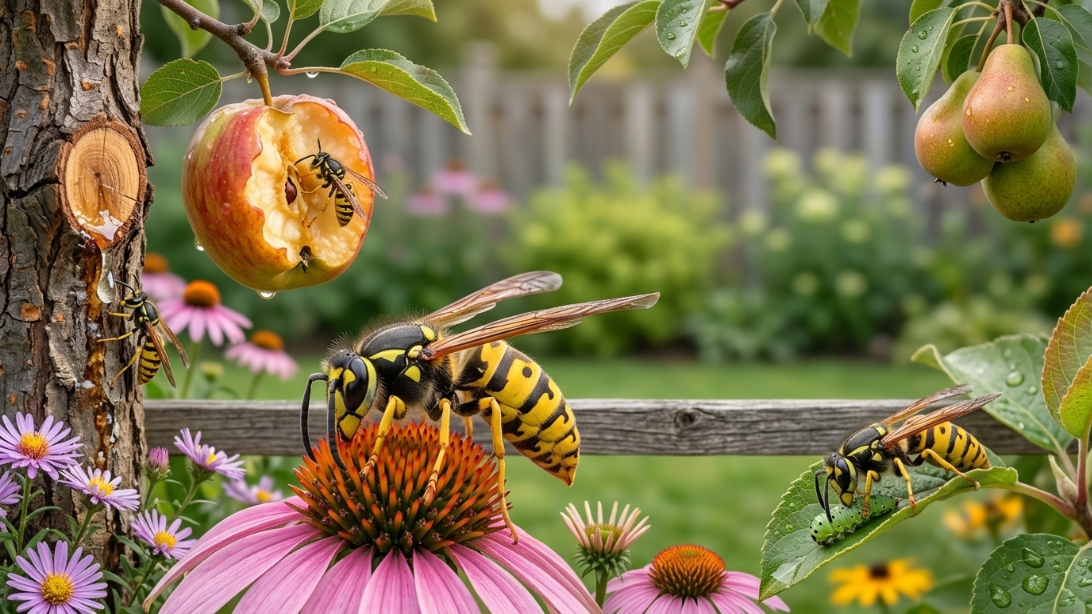
Adult wasps feed primarily on nectar and sugary substances, but most social species also hunt other insects, particularly caterpillars, flies, and garden pests, to feed protein to their developing larvae. This predatory behaviour is genuinely useful for gardens, since a nest tucked away from human activity can meaningfully reduce the number of caterpillars and other nuisance insects nearby. Mud daubers take this a step further, hunting spiders specifically, paralyzing them with venom, and sealing them inside individual mud cells as food for their larvae.
This changes as the season progresses. Early in the year, colonies focus heavily on protein to feed growing larvae, but by late summer, once the colony’s larval needs shift, workers turn their attention toward sugar, which is exactly why wasps become such a persistent nuisance around soft drinks, fruit, and garbage at exactly the time most homeowners are using their yard the most.
Wasp Life Cycle and Reproduction
Nearly all social wasp species in Canada follow the same annual cycle, which explains why a barely noticeable nest in June can become a serious problem by late summer.
- Overwintering queen – A single mated queen survives the winter in a sheltered spot, such as under loose bark, in a hollow log, or within soil cavities.
- Nest founding – In spring, the queen emerges, builds a small paper nest from chewed wood fibre mixed with saliva, and lays the first batch of eggs alone.
- Worker development – Once the first workers mature, they take over nest-building, foraging, and larvae care, allowing the queen to focus entirely on egg-laying.
- Colony peak – Through summer, the colony grows steadily, reaching peak size and aggression by late August or September, with some yellow jacket colonies numbering in the thousands.
- New queens and colony collapse – In late summer and fall, the colony produces males and future queens. After mating, the new queens seek shelter to overwinter alone, while the rest of the colony, including the original queen, dies off completely as temperatures drop.
Wasps don’t reuse an old nest the following year, since the entire colony dies out each fall except for the newly mated queens. That said, if a nest isn’t fully treated during the season, the colony can continue rebuilding in the same general location until cold weather finally ends its activity.
Wasp Behaviour and Seasonal Activity
This changes considerably as the season progresses. Colonies are smallest and least defensive in late spring and early summer, when the queen and a handful of early workers are focused on building the nest rather than defending it. By late summer, colonies have reached peak population and become noticeably more aggressive, particularly yellow jackets, which shift toward scavenging behaviour around garbage, barbecues, and outdoor food.
Most homeowners are surprised to learn how much of this aggression connects directly to colony size rather than the season itself. A small paper wasp nest discovered in June is a fundamentally different situation than the same nest left untouched until August, since the colony has had months to grow and the workers have far more to defend.
Signs of a Wasp Infestation

A few signs point to an active nest nearby, even before it’s fully visible:
- Repeated wasp traffic in and out of a single point, such as a gap in siding, a hole in the ground, or a soffit vent
- A visible paper nest hanging from a tree branch, eave, or deck overhang
- Increased wasp activity around garbage cans, outdoor dining areas, or fallen fruit in late summer
- A faint papery, chewed-wood material appearing near a nest entrance as the colony expands
- Wasps appearing inside the home, which can indicate a nest inside a wall void or attic space
If you notice consistent traffic at a single entry point, it’s worth watching from a safe distance rather than approaching directly, since that pattern is often the clearest way to confirm an active nest before deciding on next steps.
Are Wasps Dangerous to Humans?
Wasps can sting repeatedly, unlike honeybees, which die after a single sting, and a disturbed nest, particularly a yellow jacket or bald-faced hornet colony, can result in multiple stings within seconds if workers respond defensively. Most stings cause temporary pain, redness, and swelling that resolves within a few days.
For some people, a wasp sting carries a more serious risk. A portion of the population has a genuine venom allergy that can trigger anaphylaxis, a severe, potentially life-threatening reaction involving swelling, difficulty breathing, or loss of consciousness. Many people don’t realize they have this allergy until their first serious reaction, which is part of why any significant swelling, difficulty breathing, or dizziness following a sting warrants immediate medical attention rather than waiting to see if it improves. Pets are also frequently stung, often on the face or paws, when they investigate a ground nest or disturb one while playing outdoors.
How to Prevent Wasps
Prevention comes down to removing what attracts wasps and closing off the spots they favour for nesting:
- Keep garbage cans sealed and cleaned regularly, especially during late summer
- Cover food and sugary drinks when eating outdoors, and clean up spills promptly
- Seal gaps in siding, vents, and utility penetrations where wasps can access wall voids
- Inspect eaves, soffits, and deck undersides early in the season, when small nests are far easier to remove
- Pick up fallen fruit from trees promptly, since overripe fruit strongly attracts wasps in late summer
- Fill in unused rodent burrows or ground holes in the lawn, since yellow jackets often nest in abandoned burrows
We’ve found that homeowners who inspect their property in late spring and deal with small, newly started nests right away avoid the vast majority of the late-summer wasp problems we get called out for. A June nest is a quick, low-risk job. The same nest in August is an entirely different situation.
How to Get Rid of Wasps
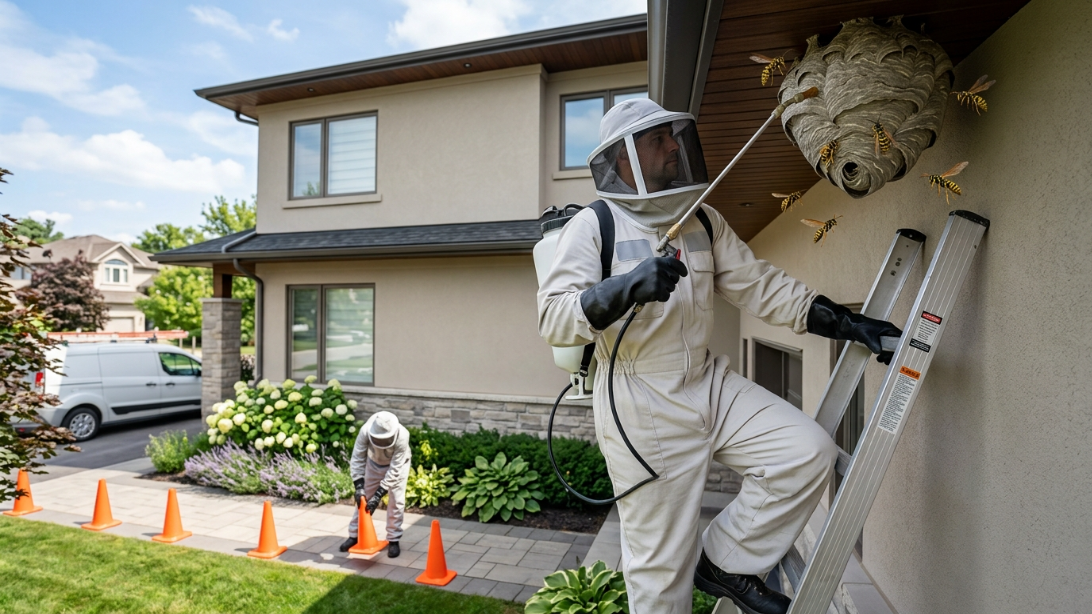
Early-season removal – A small, exposed nest discovered in late spring or early summer, with few workers present, may be manageable with care, particularly for paper wasp nests that are clearly visible and away from high-traffic areas.
Targeted insecticide treatment – Products specifically labelled for wasp and hornet nests, applied at a safe distance and typically at dusk when activity is lowest, can be effective for smaller, accessible nests.
Physical nest removal – Once a colony has been eliminated, removing the physical nest helps prevent lingering activity and discourages other wasps from investigating the same spot.
Why DIY Wasp Removal Often Goes Wrong
This is one area we’re direct about, because the risk here is genuinely different from most other pests. Store-bought sprays often don’t reach the entire colony, particularly with underground or wall-void nests, and disturbing a nest without eliminating it can provoke a defensive response from hundreds of workers at once. Attempting removal from a ladder, near an entry point, or without protective equipment significantly increases the risk of multiple stings. Anyone with a known venom allergy should never attempt nest removal under any circumstances, and by late summer, when yellow jacket and bald-faced hornet colonies have reached full size, professional removal is strongly recommended for nearly everyone.
Professional Wasp Nest Removal
A proper wasp removal starts with correctly identifying the species, since yellow jackets, paper wasps, bald-faced hornets, and mud daubers all require slightly different approaches based on nest location and colony defensiveness. Our pest control services use appropriate protective equipment and targeted treatment to eliminate a colony safely, including nests hidden underground or inside wall voids that aren’t accessible without proper tools.
If you’re dealing with wasp activity alongside other pest concerns, such as spider activity feeding off the same insect population, it’s worth having a broader home and wildlife inspection done at the same time, since properties with one pest issue often have overlapping conditions attracting others.
Frequently Asked Questions
Are wasps harmful to humans?
Wasps can sting repeatedly and a disturbed nest can result in multiple stings at once. Most stings cause temporary pain and swelling, though people with a venom allergy can experience a serious, potentially life-threatening reaction and should seek medical attention immediately if symptoms like swelling or difficulty breathing occur.
What is a wasp nest?
A structure built from chewed wood fibre mixed with saliva, forming a papery material. Nests vary by species, from open, umbrella-shaped paper wasp nests to enclosed, football-shaped bald-faced hornet nests to hidden underground yellow jacket colonies.
When should I call a professional wasp removal service?
Whenever a nest is hidden underground or inside a wall void, when the colony has grown large by late summer, when anyone in the household has a known sting allergy, or when the nest is located near a door, deck, or area with regular foot traffic.