

What Is a Bee?
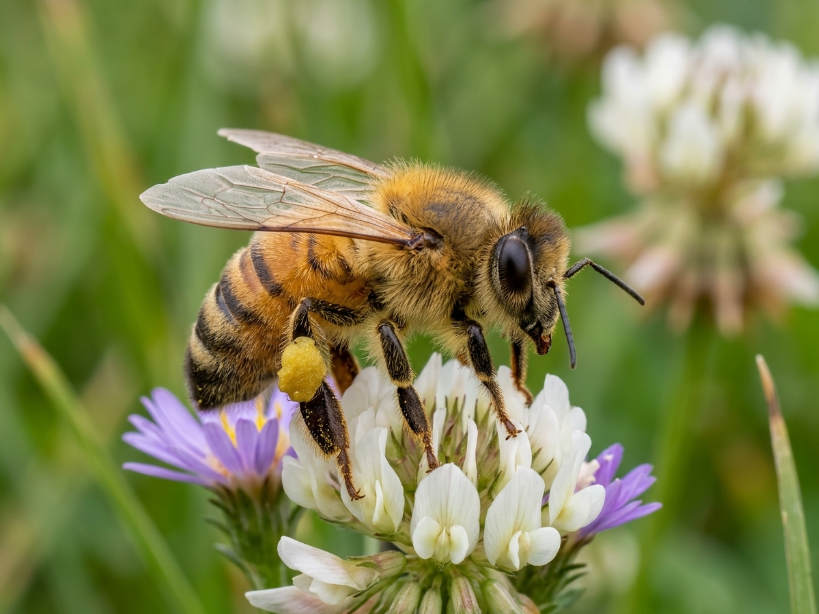
A bee is a flying insect in the order Hymenoptera, the same broader group that includes wasps and ants, but bees are set apart by their diet and their role in the natural world. Unlike wasps, which are largely predatory, bees feed on nectar and pollen from flowering plants, and in the process of collecting that food, they transfer pollen between flowers, making them some of the most important pollinators on the planet.
What kind of animal is a bee? Bees are insects, with six legs, three body segments, and typically a fuzzy, hair-covered body that helps pollen cling to them as they move from flower to flower. There are more than 20,000 bee species worldwide, and nearly 800 have been recorded in Canada, ranging from the familiar honey bee to dozens of small, solitary native species most homeowners have never noticed.
What Do Bees Look Like? Identification and Appearance
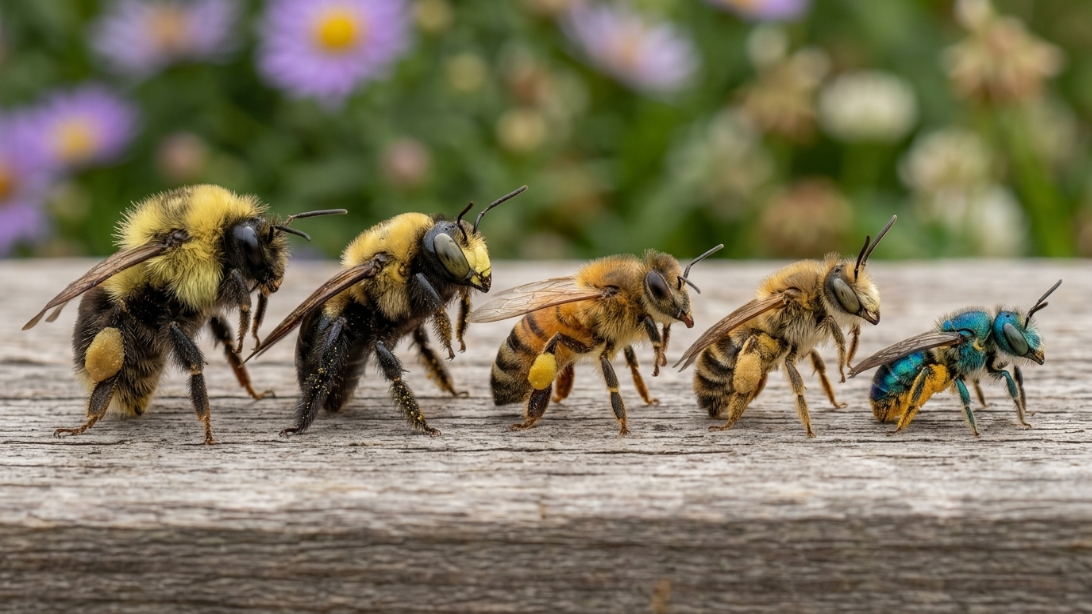
Bees generally have a rounder, fuzzier body than wasps, covered in branched, hair-like structures that help pollen stick to them as they forage. Colour and size vary considerably by species, from the golden-brown and black striped honey bee to the large, robust, black-and-yellow bumble bee to smaller, often overlooked native species that can resemble flies at a glance. The easiest way to distinguish a bee from a wasp is texture and body shape: bees look fuzzy and rounded, while wasps are smooth, shiny, and have a narrow, pinched waist.
Common Bee Species in Canada
A handful of species make up most of the bee activity homeowners in Ontario are likely to notice.
- Honey bee (Apis mellifera) – Light brown with alternating light and dark stripes, and the only common bee species that produces and stores honey. Honey bees were introduced from Europe centuries ago and are now managed extensively by beekeepers, though wild colonies do occasionally establish themselves in hollow trees, wall voids, or attics.
- Bumble bee (genus Bombus) – Large, round, and densely fuzzy with bold black-and-yellow colouring. Bumble bees form small annual colonies, often in abandoned rodent burrows, dense grass, or other sheltered ground-level cavities, and are considered generalist pollinators, visiting a wide range of plants throughout the growing season.
- Carpenter bee (genus Xylocopa) – Similar in size and colour to a bumble bee but with a shiny, hairless, black abdomen rather than a fuzzy one. Carpenter bees are solitary and excavate tunnels into weathered, unpainted wood, including decks, siding, and eaves, which is where their reputation as a nuisance pest comes from.
- Mason bee (genus Osmia) – Small, often metallic blue or green, solitary bees that nest in existing cavities, such as hollow stems or small holes in wood, sealing each cell with mud. Mason bees are considered exceptionally efficient pollinators, since they carry pollen loosely on their body rather than in a pouch, dropping it on nearly every flower they visit.
- Sweat bee (family Halictidae) – Small, slender, and often metallic in colour, nesting in the ground. Named for their occasional attraction to human perspiration, sweat bees are gentle and rarely sting unless directly handled.
One thing we notice on inspections is how often a homeowner assumes any striped, buzzing insect is a bee. In our experience, a genuinely aggressive, food-scavenging insect around a garbage can or picnic table is almost always a yellow jacket, not a bee. Bees are considerably calmer and are focused on flowers rather than human food.
Bees vs. Wasps: How to Tell Them Apart
Because the two get confused so often, a few clear differences help sort them out:
- Bees have a fuzzy, hair-covered body; wasps are smooth, shiny, and largely hairless
- Bees feed on nectar and pollen; most social wasps hunt insects and scavenge human food, especially in late summer
- Honey bees can only sting once and die shortly after; bumble bees and most wasp species can sting multiple times
- Bees are generally calm around flowers and rarely aggressive unless a nest is directly threatened; yellow jackets in particular are far more likely to sting with minimal provocation
Where Do Bees Live? Habitat
Nesting habits vary enormously depending on the species involved.
- Honey bees nest in hollow trees, wall voids, chimneys, and occasionally attics, building structured wax comb inside the cavity
- Bumble bees nest at or below ground level, frequently reusing abandoned rodent burrows, compost piles, or dense grass thatch
- Carpenter bees excavate tunnels directly into weathered, unpainted wood, favouring deck railings, fascia boards, eaves, and siding
- Mason bees and many other solitary species use existing cavities, including hollow plant stems, cracks in wood, or small pre-existing holes, rather than excavating new space themselves
- Sweat bees and many mining bees nest in bare, sandy, or exposed patches of soil
This changes depending on the species. Roughly 70 percent of solitary native bees nest underground in small vertical tunnels, while others, like carpenter bees and mason bees, prefer wood or existing cavities. Our technicians usually discover that what a homeowner describes as a “bee infestation” in the lawn is more often ground-nesting yellow jackets, since most native ground-nesting bees are solitary, non-aggressive, and easy to overlook entirely.
What Do Bees Eat?
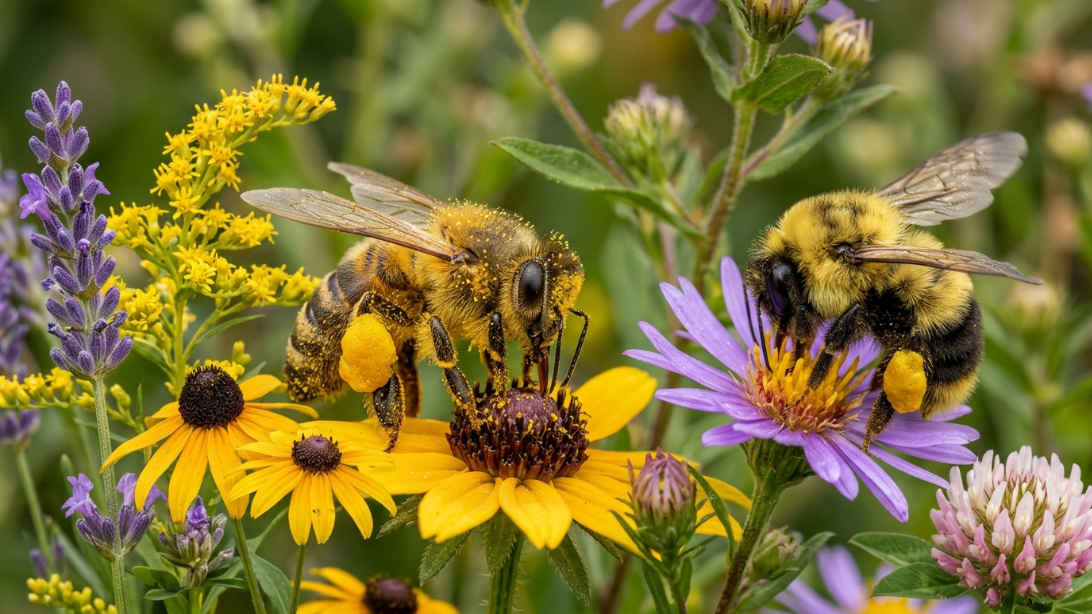
Bees feed on nectar for energy and collect pollen as a protein source, primarily to feed their developing larvae. As a bee moves from flower to flower gathering both, pollen clings to the hairs covering its body and gets transferred between blossoms, which is the pollination process that makes bees so ecologically valuable. Honey bees take this a step further, converting collected nectar into honey and storing it within their hive as a food reserve to sustain the colony through winter.
Bee Life Cycle and Colony Structure
Life cycle and social structure vary significantly depending on whether a species is social or solitary.
Social species (honey bees and bumble bees) organize around three castes:
- Queen – The sole egg-laying female in the colony, responsible for founding and sustaining the population.
- Workers – Sterile females that make up the majority of the colony, responsible for foraging, building or maintaining the nest, and caring for developing larvae.
- Drones – Male bees whose primary role is mating with new queens; they don’t forage or defend the colony and lack a stinger entirely.
A honey bee colony can persist year-round, with the queen laying eggs continuously and the hive maintaining its structure through winter by clustering together for warmth. Bumble bee colonies, by contrast, follow an annual cycle much like wasps: an overwintered queen starts the colony alone each spring, workers take over foraging as the season progresses, and by fall, the colony produces new queens and drones before the original colony dies off, leaving only newly mated queens to overwinter and start again the following spring.
Solitary species (carpenter bees, mason bees, and most native bees) skip the colony structure entirely. Each female builds and provisions her own individual nest cells with pollen and nectar, lays a single egg in each, and then seals it off. There’s no shared colony, no worker caste, and typically very little defensive behaviour, since there’s no larger colony investment to protect.
Bee Behaviour: Why Bees Are Important
Bees are considered the most significant pollinators of flowering plants worldwide, and their role extends directly into food production. A substantial share of human food crops, including many fruits, vegetables, and field crops, depend at least partly on bee pollination, and native wild bees are often more efficient pollinators for certain crops than managed honey bees. This is exactly why professionals in this industry approach bee removal differently than most other pests: a healthy bee population benefits gardens, crops, and the broader ecosystem in ways that make wholesale extermination a genuinely poor outcome whenever a safer alternative exists.
This changes depending on the season. Bee activity increases sharply in spring and summer as flowering plants bloom and colonies build up their population, then tapers off in fall as social colonies prepare for winter or, in the case of bumble bees, produce their final generation of new queens before the rest of the colony dies out.
Signs of Bee Activity Around a Home
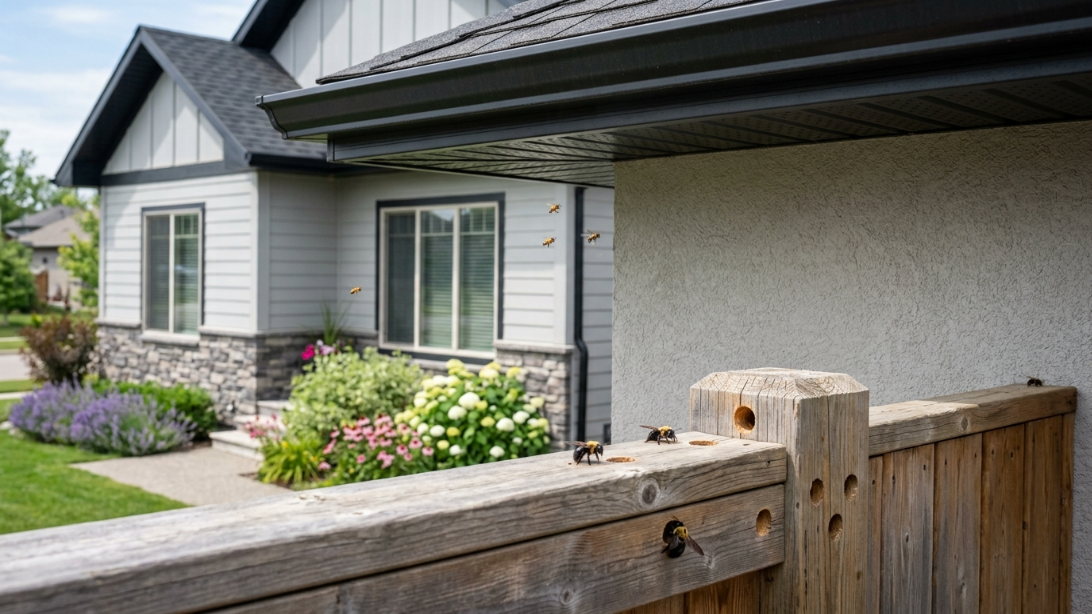
A few signs point toward genuine bee activity rather than a wasp problem:
- Consistent, calm traffic of fuzzy insects entering and exiting a single gap in siding, a wall void, or a chimney, typical of an established honey bee colony
- Small, round holes bored into unpainted wood surfaces, often with a fine sawdust-like material beneath, indicating carpenter bee activity
- Ground-level holes with bees entering and exiting calmly, rather than aggressively, suggesting bumble bees or solitary ground-nesting species
- A faint honey or beeswax smell near a wall or chimney, which can indicate an established honey bee hive inside the structure
If the insects you’re seeing are aggressively defending a food source, like a garbage can or an outdoor drink, rather than visiting flowers, you’re almost certainly dealing with wasps rather than bees.
Are Bees Dangerous to Humans?
Most bees are far less aggressive than wasps and generally only sting when directly threatened or when a nest is disturbed. Honey bees can sting only once, since their barbed stinger remains in the skin and the bee dies shortly afterward, while bumble bees can sting multiple times but are considered docile and rarely do so outside of nest defence. Solitary bees, including mason bees and most native species, pose very little stinging risk at any time, and males of every bee species lack a stinger entirely.
As with wasps, a portion of the population has a genuine allergy to bee venom that can result in a serious reaction, and anyone experiencing significant swelling, difficulty breathing, or dizziness after a sting should seek medical attention promptly. Carpenter bees present a different kind of concern: not a stinging risk, since males can’t sting and females rarely do, but a structural one, since repeated tunnelling into deck boards, siding, and fascia over several seasons can lead to genuine wood damage.
How to Prevent Bees
Prevention largely comes down to reducing the conditions that attract nesting activity near the home:
- Seal gaps around siding, soffits, chimneys, and wall penetrations where honey bees could establish a hive
- Paint or seal exposed, unfinished wood surfaces, since carpenter bees strongly prefer weathered, unpainted wood
- Fill in unused ground-level holes and reduce dense, undisturbed grass thatch where bumble bees might nest
- Inspect decks, fascia boards, and eaves each spring for small round holes before a carpenter bee population becomes established
We’ve found that most bee-related calls we get involve carpenter bees returning to the same weathered deck year after year, and painting or sealing that wood is a far more lasting solution than repeatedly treating new holes each spring.
How to Get Rid of Bees
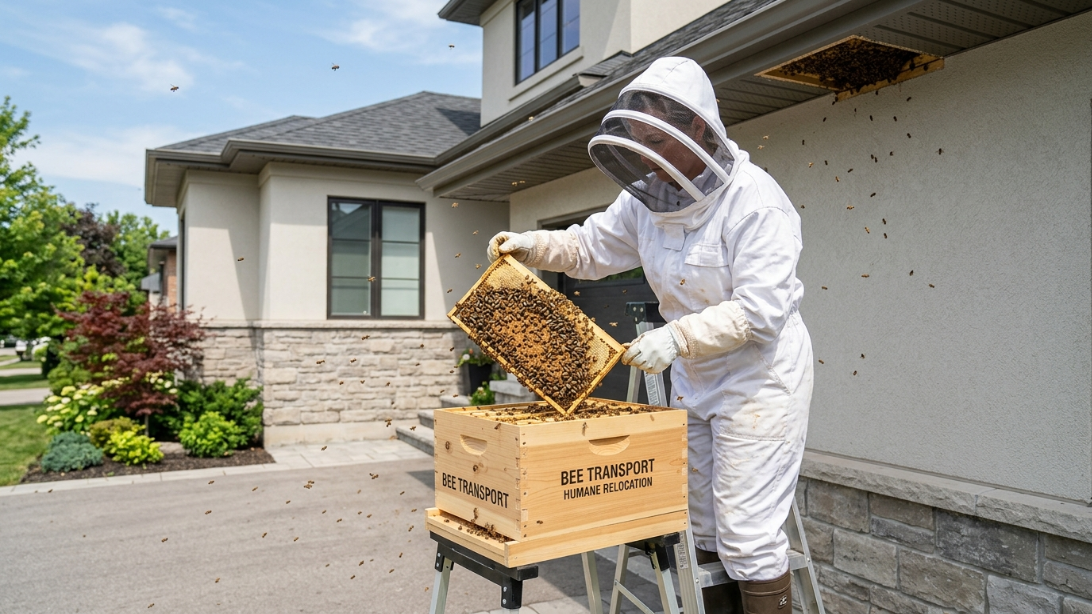
Live relocation – For an established honey bee colony found in a wall void, chimney, or other structure, relocation by a beekeeper or trained professional is generally the preferred approach, since it preserves the colony rather than destroying it, and is often required or strongly recommended given the ecological importance of honey bees.
Carpenter bee treatment – Existing holes can be treated and sealed, and painting or staining exposed wood going forward helps prevent new tunnelling from starting.
Habitat adjustment – For ground-nesting bumble bees or solitary species in an inconvenient spot, waiting out the relatively short active season, or gently relocating a small nest, is often more appropriate than chemical treatment, particularly given how limited the stinging risk actually is.
DIY vs. Professional Bee Removal
This is one area where we’re upfront that the right approach isn’t always simple extermination. Removing drywall or siding to access a honey bee colony without a plan for the wax comb left behind can lead to melting honey and structural staining, and treating a colony rather than relocating it destroys pollinators that provide real value to the surrounding area.
Our technicians usually discover that homeowners assumed they were dealing with an aggressive wasp problem, only to find a calm, established honey bee colony once we’ve had a proper look, which changes the entire approach we recommend.
Professional Bee Removal
A proper bee inspection starts with correctly identifying the species and assessing whether relocation, treatment, or simple habitat modification is the right approach. Our pest control services prioritize safe removal methods that account for the ecological value of bees whenever possible, while still addressing genuine safety or structural concerns, such as a hive established inside a wall void or ongoing carpenter bee damage to a deck.
If you’re unsure whether you’re dealing with bees or wasps, sending a photo before attempting anything yourself is the safest first step. If bee or wasp activity is turning up alongside other pest concerns around your property, a broader home and wildlife inspection can help identify what else might be drawing insects toward the house.
Frequently Asked Questions
What kind of animal is a bee?
A bee is an insect, with six legs and three body segments, most commonly identified by a fuzzy, hair-covered body that helps pollen cling to it while foraging.
What is the definition of a bee?
A bee is any of more than 20,000 species of flying, typically fuzzy-bodied insects that collect pollen and nectar from flowers, a behaviour that makes them essential pollinators for a large share of food crops worldwide.
Why are bees important?
Bees are among the most significant pollinators of flowering plants and food crops, and a substantial portion of the fruits, vegetables, and other crops people rely on depend at least partly on bee pollination.