

What Is a Spider?
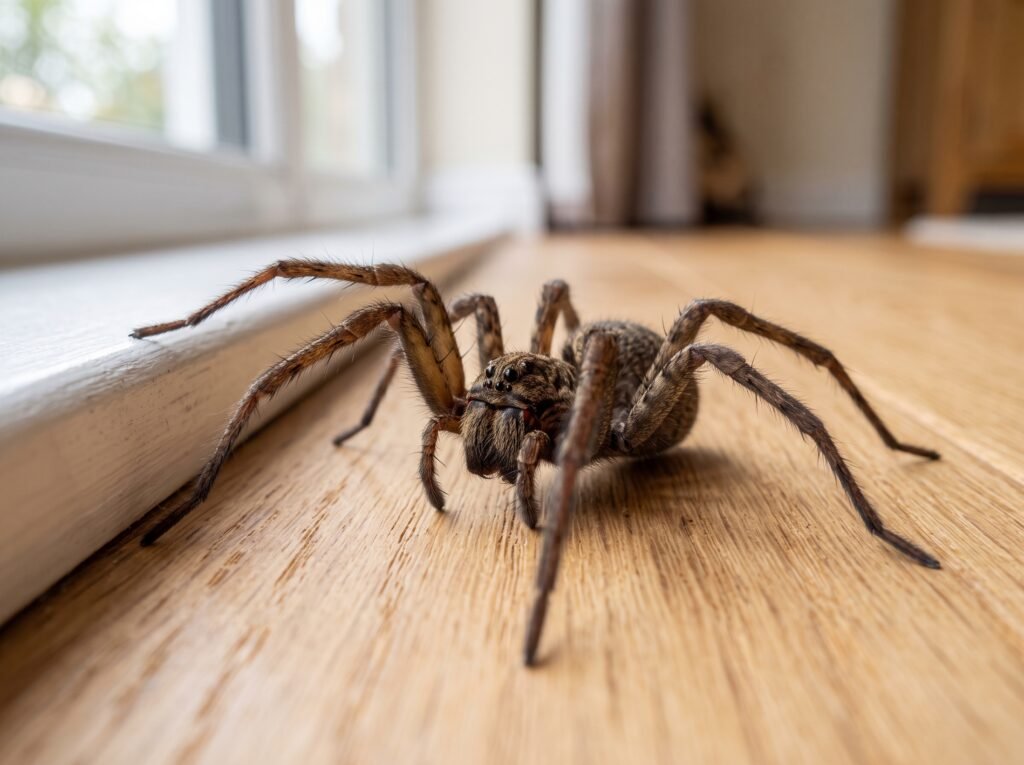
A spider is an eight-legged arachnid, not an insect, and that distinction matters more than people realize. Insects have six legs and typically three body segments; spiders have eight legs and only two body segments, a fused head and thorax called the cephalothorax, and an abdomen. Spiders also lack antennae and wings, features that most insects have.
Spiders belong to the order Araneae, and virtually all species produce silk, though not every spider builds a web to catch prey. Some are active hunters that chase down insects, while others rely on webs, ambush, or ground-level burrows. In our experience, this is the detail that surprises most homeowners: the spider in the corner of your basement and the one darting across your garage floor may be catching food in completely different ways, even though they look similarly unwelcome.
Is a Spider an Insect?
No. Spiders are arachnids, a class that also includes ticks, mites, and scorpions. The easiest way to tell an insect from a spider at a glance is to count the legs and check for antennae. Insects have six legs, a segmented body with three distinct sections, and usually antennae. Spiders have eight legs, two body sections, and no antennae at all.
What Do Spiders Look Like? Identification and Appearance
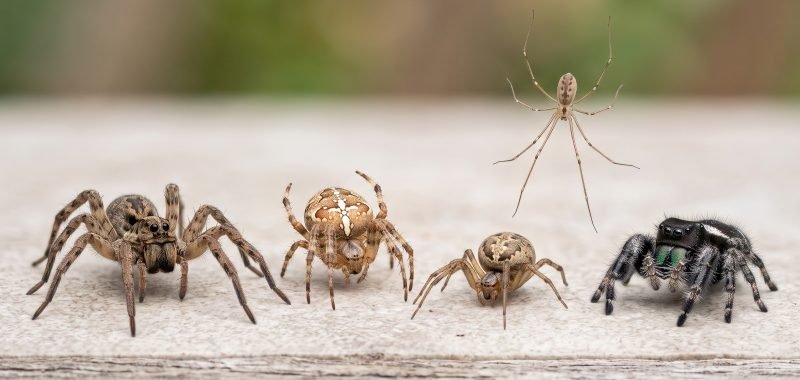
Spider appearance varies enormously by species, but a few features stay consistent across nearly all of them: eight legs, two body segments, multiple pairs of eyes, and fang-like mouthparts called chelicerae used to deliver venom to prey. Size, colour, and leg length differ dramatically depending on the species, ranging from small, pale sac spiders barely visible against a wall to large, robust wolf spiders that startle homeowners with their speed alone.
Common Spiders in Canada and Ontario
Ontario is home to a wide range of spider species, though homeowners in the GTA will typically only encounter a handful on a regular basis.
- House spider (Parasteatoda tepidariorum): The most commonly found spider indoors, with a brown, grey, or orange body and an off-white patterned abdomen. Builds tangled, irregular webs in corners, closets, and undisturbed areas, and can live for over a year.
- Wolf spider: Large, fast-moving, and often mistaken for something far more dangerous simply because of its size and speed. Wolf spiders don’t build webs to hunt; they chase down prey directly and are considered the largest spider species commonly found in Canada.
- Cellar spider (daddy long legs): Recognizable by extremely long, thin legs and a small body. Found in basements, crawl spaces, and storage areas, where they hang upside down in loose, irregular webs.
- Jumping spider: Small, compact, and known for excellent vision and short, precise jumps rather than webs, used both to hunt and to escape.
- Orb-weaver spider: Builds the classic circular, spiral web most people picture when they think of a spider web. Typically an outdoor species found in gardens, shrubs, and near porches or windows.
- Sac spider: A generic-looking, pale yellow, tan, or grey spider with an elongated abdomen, often found in ceiling corners or under furniture, and considered one of the more common structure-infesting spiders in the region.
- Black widow: Rare in Canada and found mainly in southern regions close to the Canada-US border. Shiny black with a distinctive red hourglass mark on the underside of the abdomen.
One mistake we see repeatedly is a homeowner assuming they’ve found a brown recluse after seeing a photo online. The brown recluse does not live in Ontario, and sightings reported as one almost always turn out to be a different species entirely, most often a sac spider or a young wolf spider.
Where Do Spiders Live? Habitat and Hiding Spots
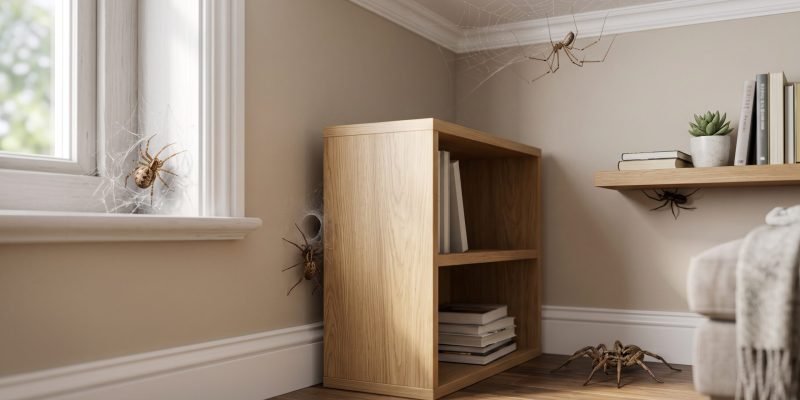
Spiders are drawn to areas with a steady supply of insects to feed on, along with dark, undisturbed spaces to build a web or retreat. Common hiding spots include:
- Basements, crawl spaces, and cellars
- Window frames, door frames, and corners of rooms
- Garages, sheds, and woodpiles
- Under furniture, in closets, and inside storage boxes
- Ceiling corners, especially in rooms with less foot traffic
- Foundation cracks and gaps around exterior siding
This changes depending on the species. House spiders and cellar spiders settle indoors and rarely leave once established, while wolf spiders and orb-weavers are primarily outdoor hunters that only end up inside when they follow prey through an open door or gap. Our technicians usually discover that a homeowner’s biggest spider concern is actually an insect problem, since spiders will always gather wherever there’s a reliable food source.
What Do Spiders Eat?
Nearly all spiders are predators, feeding on insects and other small arthropods rather than anything found in a pantry. Once prey becomes tangled in a web or is caught during a hunt, the spider immobilizes it with silk, injects venom to subdue it, then uses a predigestive fluid to liquefy the prey before feeding. Wolf spiders play a genuinely useful role outdoors, since they prey on common garden pests like caterpillars, aphids, and plant bugs.
This is exactly why spider activity indoors is often a symptom of a different pest problem rather than the root issue itself. If you’re seeing an unusual number of spiders in one area of the home, it’s worth checking for a nearby insect population, whether that’s cockroaches, flies, or another food source drawing them in.
Spider Life Cycle and Reproduction
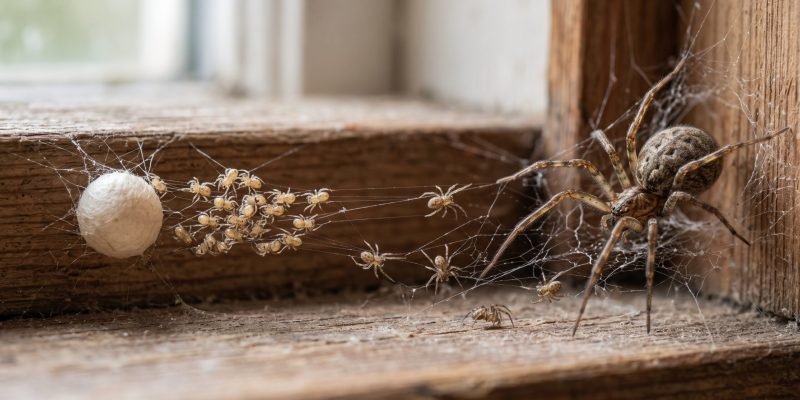
Spiders develop through three stages: egg, spiderling (or nymph), and adult. Females produce silk egg sacs, and the number of eggs per sac varies widely by species. A female house spider, for example, can produce up to 17 egg sacs over her lifetime, with each one containing between 100 and 400 eggs. Spiderlings hatch looking like miniature versions of adults and grow through a series of molts as they mature, without going through the dramatic transformation seen in insects like moths or beetles.
Reproduction itself often involves a distinct courtship behaviour. Male house spiders, for instance, will pluck at strands of a female’s web to signal their presence before approaching, since females are considerably larger and will treat an unannounced male as prey.
Spider Behaviour and Seasonal Activity
Most spiders are shy, nocturnal, and actively avoid contact with people, preferring to flee rather than confront anything larger than typical prey. Most homeowners are surprised to learn that spiders can’t hear in the way insects or mammals do; many species instead rely on fine hairs on their legs to detect vibrations and airflow.
Spider activity tends to increase noticeably in late summer and early fall, when many species reach full maturity and males actively wander in search of mates, which is exactly why homeowners see more large spiders indoors during September and October than any other time of year. Outdoor species like orb-weavers become far more visible during this same period, spinning larger, more noticeable webs as they reach adulthood.
Signs of a Spider Infestation
Spiders themselves are the most obvious sign, but a few other indicators point to an established population rather than the occasional wanderer:
- Webs in corners, window frames, or undisturbed areas of a room
- Small silk egg sacs, often lined along baseboards in damp, dark spaces
- Shed exoskeletons left behind as spiderlings mature
- A noticeable increase in web-building insects being caught, hinting at a broader insect population nearby
- Multiple spiders of the same species found in a single area, particularly in basements or crawl spaces
Because spiders prefer to stay hidden while hunting, we’ve found that webs and egg sacs are usually the clearer sign of activity, especially in areas that don’t get cleaned or disturbed often, like the corners behind furniture or the underside of basement shelving.
Are Spiders Dangerous to Humans?
Nearly all spiders found in Canada pose very little danger to people. Spiders don’t transmit disease, and while almost every species has venom glands, most bites from common house spiders, wolf spiders, cellar spiders, and jumping spiders cause nothing more than mild, short-lived irritation, if they bite at all. Spiders are generally more interested in avoiding people than confronting them, and most bites happen only when a spider is directly squeezed or trapped against skin.
The black widow is the one species in Canada capable of a medically significant bite, though it remains rare and largely limited to southern border regions. Health authorities note that a black widow’s reaction depends on the location of the bite, the amount of venom injected, and individual sensitivity, and that serious complications are uncommon. If you’re bitten and suspect a black widow, applying an ice pack to reduce swelling and seeking medical attention is the appropriate response. The brown recluse, often feared based on stories from other regions, isn’t established in Ontario at all.
How to Prevent Spiders
Since spiders follow their food source, prevention usually comes down to reducing the insect population that draws them in, along with limiting easy entry points:
- Seal cracks and gaps around windows, doors, and foundation walls
- Repair damaged window screens and door sweeps
- Reduce outdoor lighting near entry points, since bright lights attract the insects spiders feed on
- Keep firewood, storage boxes, and clutter away from walls and off the floor
- Vacuum corners, ceilings, and basements regularly to remove webs and egg sacs before they mature
- Address any underlying insect activity, since spiders will keep returning as long as there’s a food source
We’ve found that homeowners who focus on the insect problem first, rather than the spiders themselves, tend to see a much longer-lasting reduction in activity than those who only knock down webs.
How to Get Rid of Spiders

Complete chemical removal of spiders generally isn’t recommended, since they’re effective, natural pest control for the insects most homeowners are actually trying to avoid. That said, when spider activity becomes a genuine nuisance or concern, a few approaches work well:
- Exterior barrier treatments – Registered products applied around the perimeter of the home, particularly around window frames, door frames, and foundation walls, help prevent spiders from establishing entry points in the first place.
- Physical removal – Vacuuming webs, egg sacs, and visible spiders directly is a straightforward way to reduce an existing population without chemicals.
- Habitat reduction – Clearing woodpiles, dense vegetation, and clutter near the foundation removes the undisturbed spaces spiders prefer for building webs and laying egg sacs.
DIY vs. Professional Spider Control
This is one area where we’re honest with homeowners: a few spiders here and there usually don’t need professional treatment. Where it makes sense to call in help is when you’re seeing a large, established population, repeated indoor sightings despite regular cleaning, or a species you can’t confidently identify, particularly anything resembling a black widow. Our technicians usually discover that what looks like a “spider infestation” is really an insect problem feeding a growing spider population, so addressing both at once produces far better results than treating spiders alone.
Professional Spider Removal
A proper spider inspection looks beyond the spiders themselves to identify what’s actually drawing them indoors, whether that’s a nearby light source, a gap in the foundation, or an active insect population inside the home. Our pest control services combine exterior perimeter treatment with targeted removal of webs and egg sacs, along with exclusion work to close the entry points spiders and their prey are using to get inside.
If you’re dealing with spiders alongside signs of another pest, whether that’s cockroach activity or evidence of termites in older wood, it’s worth having a broader home and wildlife inspection done at the same time, since one pest problem is often quietly feeding another.
Spider Webs and Silk: Not All Spiders Build the Same Way
Spider silk is produced by glands in the abdomen and pulled out through spinnerets, and nearly every spider species produces it, even if it isn’t used to build a traditional web. Understanding the different approaches helps explain why identifying a web is often as useful as identifying the spider itself.
- Orb webs: The classic spiral, wheel-shaped web most people picture, built by orb-weaver spiders and often rebuilt fresh each night, since many species eat their own web each morning to recycle the silk.
- Tangled or cobweb-style webs: Irregular, messy-looking webs built by house spiders and cellar spiders in corners, closets, and other undisturbed indoor spaces.
- Funnel webs: Trampoline-like sheets of silk leading into a funnel-shaped retreat, often built in wall gaps or woodpiles.
- No web at all: Wolf spiders and jumping spiders don’t build webs to hunt; they rely on speed, ambush, or short jumps, though they still use silk for egg sacs and safety lines.
In our experience, homeowners tend to associate any spider with elaborate web-building, when in reality some of the largest and fastest species you’ll encounter indoaors, like wolf spiders, don’t build a hunting web at all.
Common Spider Myths We Hear on Inspectionsan
A few misconceptions come up often enough that they’re worth addressing directly:
- “All spider bites are dangerous.” Nearly all spiders found in Ontario cause only mild, short-lived irritation if they bite at all, and most avoid biting entirely unless directly handled.
- “That’s definitely a brown recluse.” The brown recluse isn’t established in Ontario. Reported sightings almost always turn out to be a sac spider, young wolf spider, or another local species with a similar look.
- “More webs mean a bigger spider problem.” Often, it means a bigger insect problem. Spiders build where prey is plentiful, so a cluster of webs is usually a sign to check for an underlying insect issue.
- “Daddy long legs are the most venomous spider, but their fangs can’t bite through skin.” This is a persistent myth with no real scientific basis. Cellar spiders aren’t considered medically significant, and the claim about weak fangs isn’t supported by evidence either way.
Frequently Asked Questions
Is a spider an insect?
No. Spiders are arachnids, a group that also includes ticks and mites, and they differ from insects in body structure and leg count.
What is a spider classified as?
Spiders belong to the order Araneae, within the class Arachnida.
Are spiders dangerous to humans?
Most spiders found in Canada pose very little danger and rarely bite unless directly handled or trapped against skin. The black widow is the one Canadian species capable of a medically significant bite, and it’s rare outside southern border regions.