

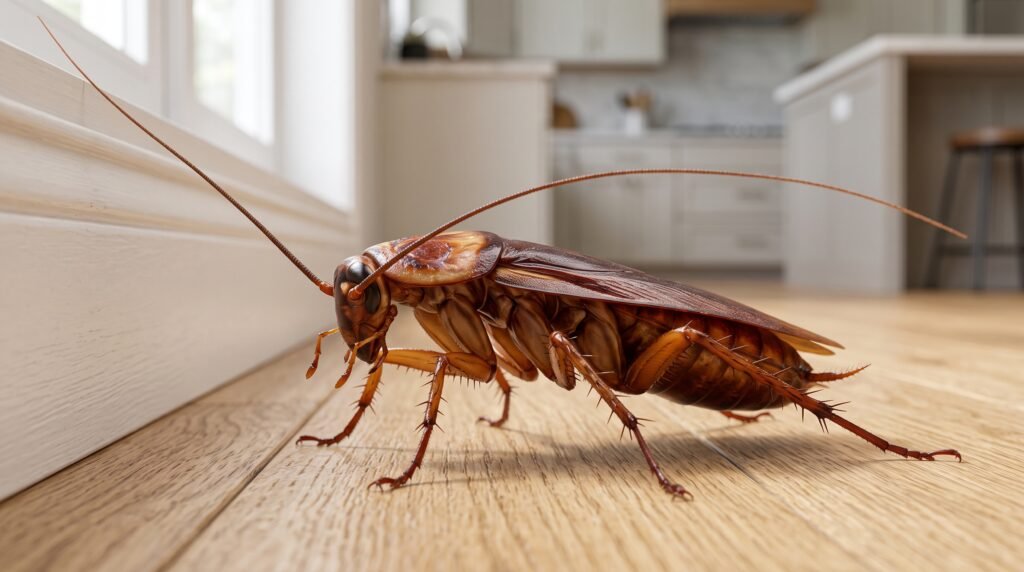
What Is a Cockroach?
A cockroach is a fast-moving, nocturnal insect with a flattened, oval body, long antennae, and six spiny legs built for running rather than jumping. Cockroaches belong to the order Blattodea, and they’ve existed on Earth for roughly four million years, adapting well enough to survive almost any environment humans have built. There are more than 3,500 species worldwide, though only a handful have adapted to living alongside people indoors.
In our experience, most homeowners assume all cockroaches look and behave the same way, but the species matters quite a bit. Where a roach hides, what it eats, and how quickly it reproduces all depend on which one has actually moved into your home.
What Do Cockroaches Look Like? Appearance and Colour
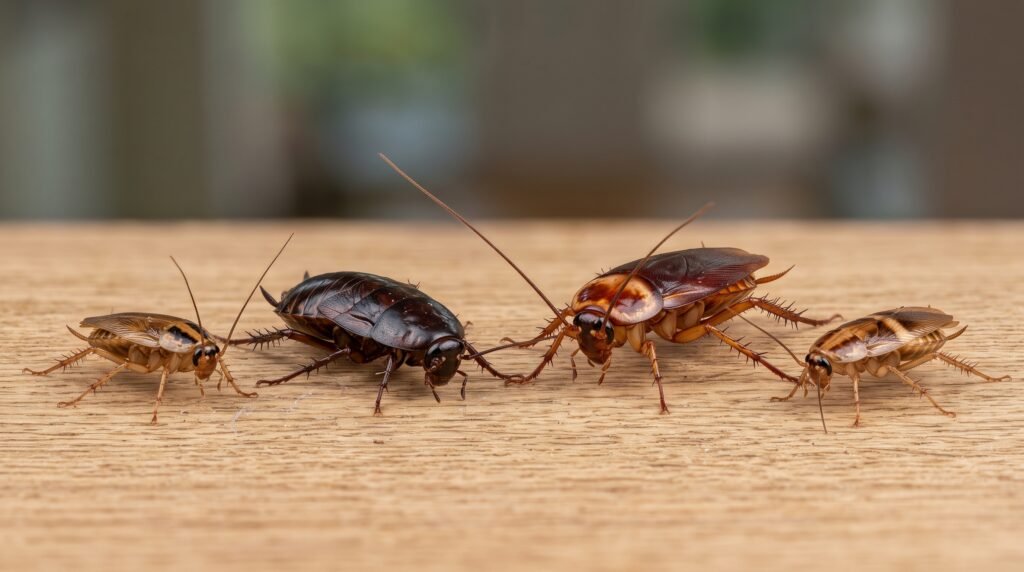
Cockroaches share a few common physical traits: an oval, flattened body that lets them squeeze into tight cracks, long thread-like antennae, and a smooth, shiny exoskeleton. Colour and size, however, vary noticeably by species:
- Light brown to tan with two dark parallel stripes behind the head
- Reddish-brown to dark brown, sometimes with a lighter band near the head
- Glossy dark brown or black with a greasy-looking sheen
- Light brown to tan with two lighter, broken bands across the wings
Most cockroaches have wings, though flying ability differs by species and even by sex within the same species. A cockroach spotted moving during the day, rather than at night, is usually a sign that a larger population is already established nearby, since these insects generally only come out into the open when overcrowding forces some individuals into visible areas.
Common Cockroach Species in Canada
Canadian homes and businesses typically deal with one of four main species, though a few others show up occasionally.
- German cockroach : The most common species found in Canadian homes, restaurants, and apartments. Light tan to brown, with two dark stripes running down the area just behind the head, and roughly 13 to 16 mm long. German cockroaches reproduce faster than any other species that infests homes, which is exactly why an infestation can go from a couple of sightings to a serious problem within weeks.
- American cockroach : The largest species homeowners are likely to encounter, growing up to 50 mm. Reddish-brown, often found in basements, crawl spaces, drains, and sewer connections. Despite the name, they’re native to Africa and the Middle East.
- Oriental cockroach : Dark brown to black with a glossy, greasy-looking body. Sometimes called a “waterbug,” this species prefers cool, damp areas like basements and drains, and tends to enter homes seeking moisture during hot, dry weather.
- Brown-banded cockroach : The smallest of the common species, identifiable by two light bands across the wings. Unlike the others, brown-banded cockroaches don’t need much moisture, so they can turn up almost anywhere in a home, including bedrooms and living rooms.
There are also wood cockroach species found across Canada, most often the Pennsylvania wood cockroach, which typically hitchhikes indoors on firewood and rarely establishes a lasting indoor population, since it prefers to feed on decaying outdoor material rather than anything found in a kitchen.
Where Do Cockroaches Live? Habitat and Hiding Spot
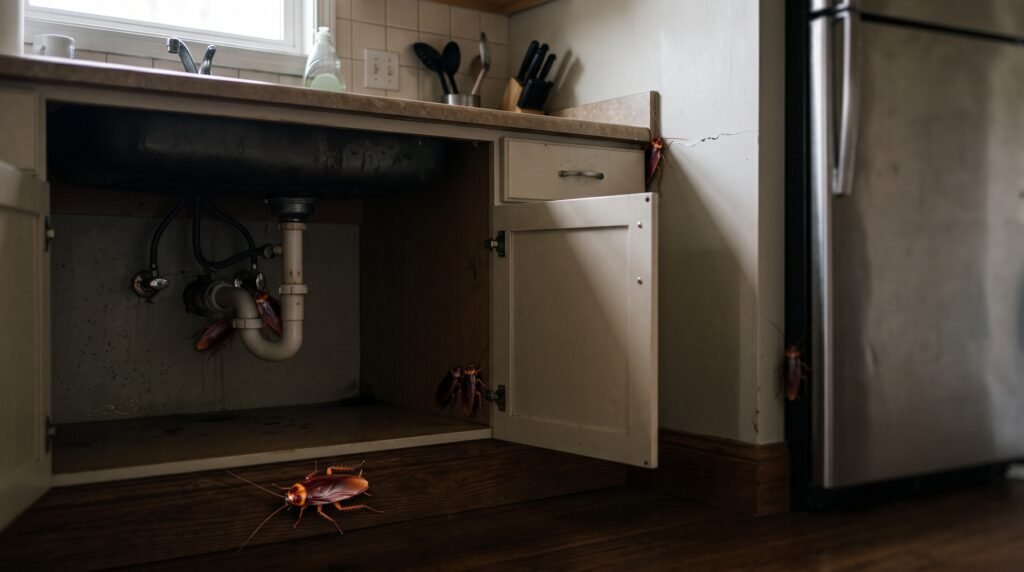
Cockroaches are drawn to warmth, moisture, food, and tight, dark spaces where they feel protected. Common hiding spots we check during an inspection include:
- Beneath and behind refrigerators, stoves, and dishwashers
- Inside kitchen cabinets, especially around plumbing penetrations
- Behind wall outlets, switch plates, and loose baseboards
- Underneath sinks and around bathroom fixtures
- Basements, floor drains, and areas near sump pumps
- Cracks in foundation walls and gaps around utility pipes
One thing we notice during inspections is how much cockroach behaviour depends on species. German cockroaches stay close to kitchens and bathrooms where food and water are close together, while American and Oriental cockroaches are far more comfortable in basements, drains, and cooler, damp spaces. Brown-banded cockroaches are the outlier, since they’ll settle into dry areas most homeowners wouldn’t think to check, including inside electronics and furniture.
What Do Cockroaches Eat?
Cockroaches are scavengers, and their diet is about as broad as any household pest you’ll come across. They feed on:
- Meats, starches, sugars, and fatty or greasy foods
- Crumbs, spills, and improperly stored pantry items
- Decaying organic matter, including food waste and compost
- Non-food items when nothing else is available, including soap, glue, toothpaste, and book bindings
- Other cockroaches, particularly dead or weakened individuals
This adaptability is part of why sanitation alone rarely solves an established infestation. Our technicians usually discover that a “spotless” kitchen still has an active cockroach population, simply because these insects need very little to survive once they’ve found consistent access to water.
Cockroach Life Cycle and Reproduction
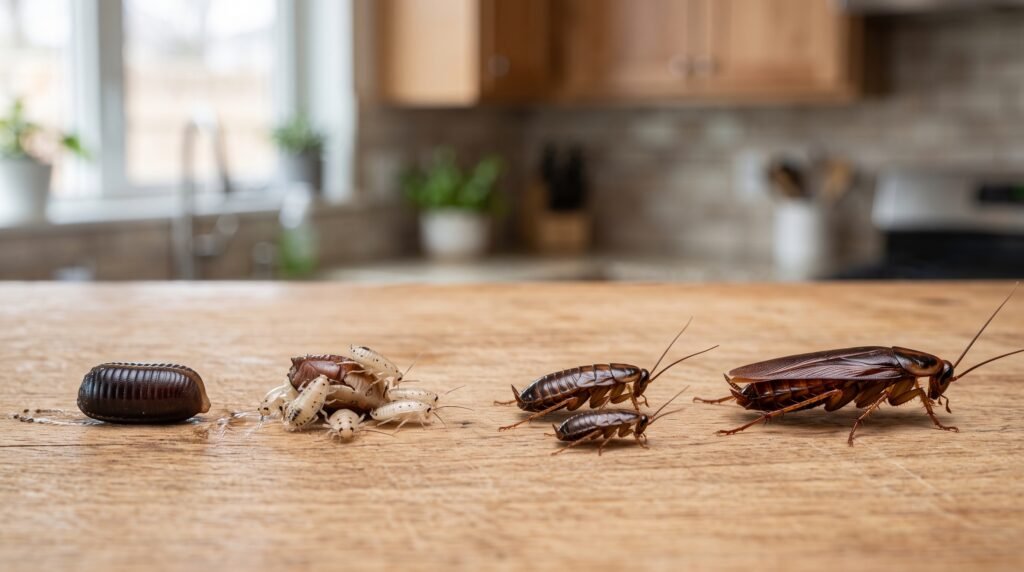
Cockroaches develop through three stages: egg, nymph, and adult, and their reproductive rate is exactly why infestations grow so quickly once established.
- Egg stage (ootheca) – Females produce an egg capsule called an ootheca, which can contain anywhere from 14 to 50 eggs depending on the species. German cockroaches typically produce four to eight oothecae over a lifetime, while American cockroaches produce smaller capsules more frequently.
- Nymph stage – Newly hatched nymphs resemble smaller, wingless versions of adults and molt repeatedly as they grow, taking anywhere from a few months to over a year to mature depending on the species and conditions.
- Adult stage – Once mature, adults can live anywhere from about six months to a year, continuing to reproduce throughout that time.
This changes depending on the species. German cockroaches develop fastest and typically make up about three-quarters of an established infestation’s population at any given time, since a large share of the colony is always in the nymph stage. American and Oriental cockroaches take considerably longer to mature but tend to live somewhat longer as adults.
Cockroach Behaviour and Seasonal Activity
Cockroaches are nocturnal and photophobic, meaning they actively avoid light and retreat quickly when a room is illuminated. This behaviour is exactly why homeowners so rarely see them directly, even in a home with an established population.
Indoor infestations in heated homes and apartments can persist year-round, regardless of the season, since central heating provides the warmth these insects need to stay active. That said, we do see an uptick in calls during the fall, when species like the American and Oriental cockroach move indoors seeking warmth and moisture as outdoor temperatures drop. German cockroaches, by contrast, are typically introduced into a home rather than migrating in on their own, most often through grocery bags, secondhand appliances, or moving boxes.
Signs of a Cockroach Infestation
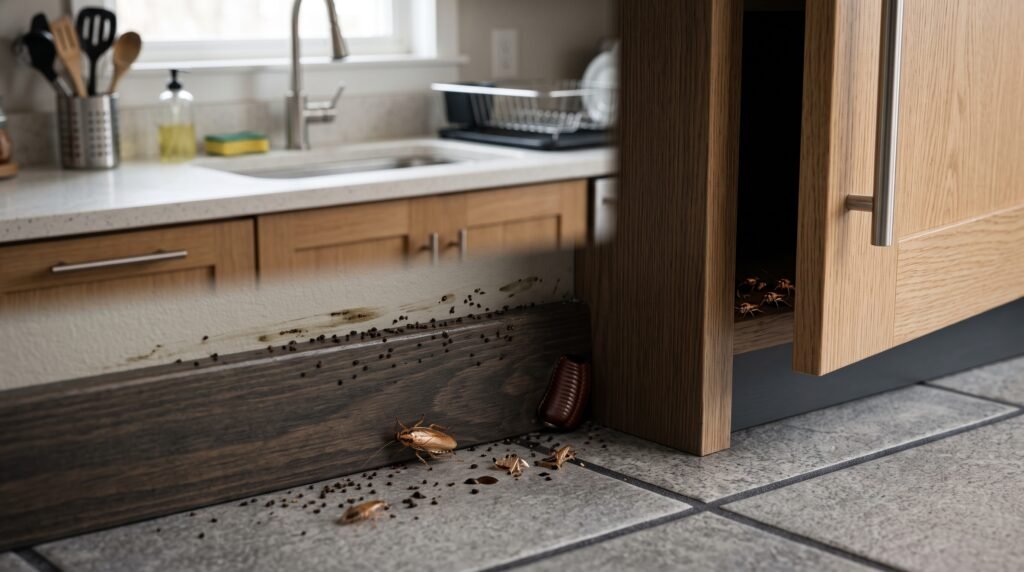
Most homeowners don’t spot a live cockroach until a population is already well established. Physical evidence tends to appear first:
- Small, dark droppings resembling coffee grounds or pepper flecks near hiding spots
- A musty, oily odour in areas with heavy activity
- Egg capsules (oothecae) tucked into cracks, behind appliances, or under furniture
- Shed skins left behind as nymphs molt and grow
- Smear marks along walls or baseboards where roaches travel repeatedly
- Live cockroaches seen during the day, which usually signals overcrowding
One mistake we see repeatedly is a homeowner treating a single sighting as an isolated incident rather than checking for these secondary signs. By the time cockroaches are visible in daylight, the population behind the walls or under the appliances is often significantly larger than what’s out in the open.
Are Cockroaches Dangerous? Health Risks
Cockroaches don’t bite people under normal circumstances, and while it’s technically possible in a severe infestation with very limited food sources, it’s rare and not something most homeowners will ever need to worry about. The real health concern is contamination and allergens rather than physical injury.
Cockroaches can pick up bacteria on their legs and bodies as they move through drains, garbage, and food surfaces, then transfer that bacteria to countertops, dishes, and stored food. Beyond contamination, proteins found in cockroach droppings, saliva, and shed skins are known allergens. When these particles become airborne, they can trigger allergic reactions and worsen asthma symptoms, particularly in children. Health researchers have identified cockroach allergen exposure as a meaningful risk factor for childhood asthma, especially with repeated exposure early in life.
Can Cockroaches Fly?
This depends entirely on the species. German cockroaches have wings but rarely do more than a short, downward glide. Oriental cockroaches can’t fly at all. American cockroaches are considered weak fliers, capable of gliding short distances, particularly in warm conditions. Male brown-banded cockroaches can fly short distances, while females generally stay grounded. If something is genuinely flying rather than gliding or running, it’s worth double-checking the identification, since a few other flying insects get mistaken for cockroaches.
How to Prevent Cockroaches
Prevention comes down to removing the food, water, and shelter cockroaches depend on:
- Wipe down counters and stovetops after cooking, and don’t leave dirty dishes overnight
- Store pantry food, including pet food, in sealed containers rather than original packaging
- Fix leaking pipes, dripping faucets, and any standing water sources
- Take garbage out regularly and keep bins sealed
- Seal cracks around baseboards, utility penetrations, and foundation walls
- Inspect secondhand appliances, furniture, and moving boxes before bringing them inside
- Reduce clutter, particularly cardboard, which offers both shelter and a food source
We’ve found that homeowners who address moisture problems first, rather than focusing only on food sources, tend to see the fastest results. A leaking pipe under a sink can sustain a cockroach population even in an otherwise clean kitchen.
How to Get Rid of Cockroaches

Gel baits – Generally considered the most effective consumer-available option. Cockroaches feed on the bait and carry it back to shared hiding spots, where it spreads through the population via contact and consumption of contaminated waste. Correct placement near known activity is essential for this method to work.
Sticky traps – Useful for monitoring where activity is heaviest and confirming which species you’re dealing with, but they don’t meaningfully reduce a population on their own.
Residual sprays – Applied to cracks, crevices, and known travel routes, these can help manage smaller populations but don’t reach the areas where a colony is actually breeding.
Foggers and bug bombs – Generally the least effective option for real infestations, since they treat open air rather than the cracks and voids where cockroaches actually live, and they can pose safety risks to people and pets when used incorrectly.
DIY vs. Professional Cockroach Control
This is one area we’re upfront about. Store-bought products can knock down a small, early-stage population, but an established infestation, particularly German cockroaches, usually requires a combination of targeted gel baiting, crack-and-crevice treatment, and follow-up visits to catch the next generation of nymphs as they hatch. Our technicians usually discover that a homeowner has already tried multiple store-bought products by the time we’re called, which can actually make roaches bait-shy and harder to treat if the wrong products were layered on top of each other.
Professional Cockroach Removal
A thorough cockroach inspection starts by identifying the species involved, since German, American, and Oriental cockroaches all require different treatment strategies based on where they hide and how they reproduce. Our pest control services combine targeted baiting, exclusion work to seal entry points, and follow-up monitoring to make sure a treatment actually breaks the reproductive cycle rather than just reducing what’s visible.
If you’re dealing with cockroach activity alongside signs of other pests, such as termite damage or rodent droppings, it’s worth having a broader home and wildlife inspection done at the same time, since overlapping pest issues aren’t unusual in older GTA homes with existing moisture or entry-point problems.
Apartments and Multi-Unit Buildings
Cockroach infestations behave differently in apartments and condos than in detached homes, and this is worth understanding if you live in a shared building anywhere in the GTA. Because German cockroaches travel through shared walls, plumbing chases, and electrical conduits, a single infested unit can spread activity to neighbouring apartments even when those units are kept perfectly clean. This is one of the reasons treating a single suite in isolation often produces disappointing results, since roaches simply move to an adjacent unit and return once treatment wears off.
If you live in a rental unit and notice activity, it’s worth reporting it to your building management as early as possible. A coordinated, building-wide treatment plan is almost always more effective than individual tenants each hiring separate pest control on their own schedule.