

What Is a Flea?
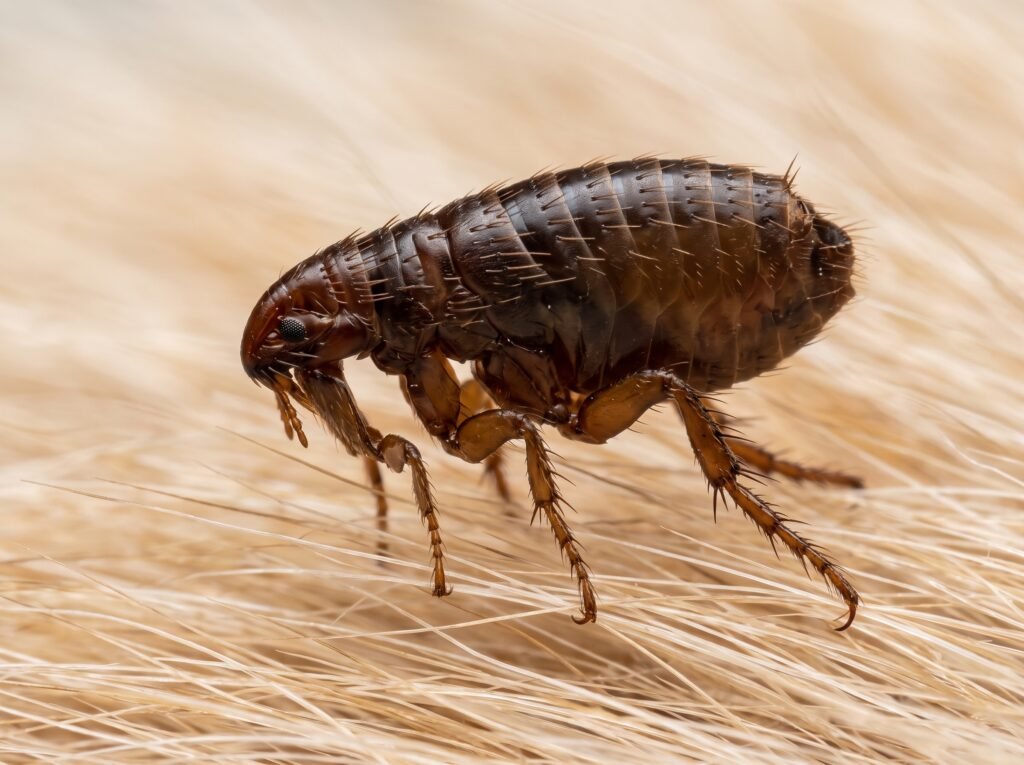
A flea is a small, wingless, blood-feeding insect belonging to the order Siphonaptera. There are roughly 2,000 recognized flea species and subspecies worldwide, though only a small number regularly affect homes and pets in Canada. Fleas are laterally flattened, meaning their bodies are thin from side to side rather than top to bottom, which lets them move quickly through fur and tight spaces without getting caught.
In our experience, most homeowners assume fleas are only a problem if you own a pet, but that isn’t accurate. Fleas will feed on humans when a preferred host isn’t available, and they can be carried indoors on wildlife, secondhand furniture, or even on clothing after time spent outdoors in an area with an active population.
What Do Fleas Look Like? Identification and Appearance
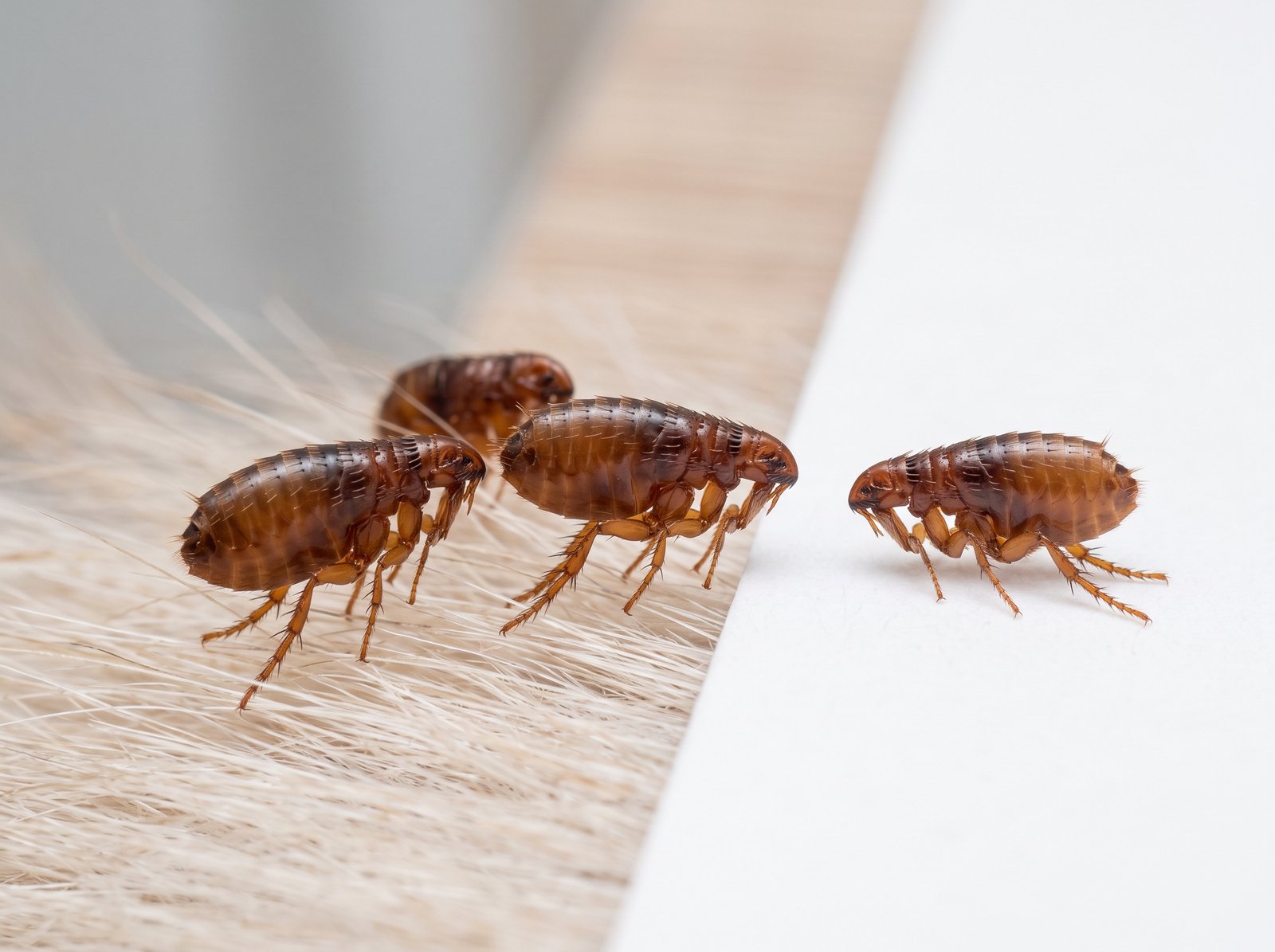
Adult fleas are small, typically measuring between 1.5 and 3.5 mm long, with a reddish-brown to dark brown, flattened body. Their hind legs are noticeably larger and more powerful than the rest of their legs, built specifically for jumping. A flea can jump as high as 15 to 20 cm vertically and roughly 40 cm horizontally, which is an extraordinary distance relative to its size and exactly why they move between a pet, its bedding, and surrounding carpet so easily.
Because adult fleas only make up a small fraction of an overall infestation, homeowners rarely see more than a couple at a time even when a larger problem exists throughout the home.
Common Flea Species in Canada
- Cat flea (Ctenocephalides felis): By far the most common species affecting homes and pets in Canada, found on cats, dogs, and a wide range of wildlife hosts. Despite the name, cat fleas are responsible for the overwhelming majority of infestations on dogs as well.
- Dog flea (Ctenocephalides canis): Considered relatively rare on dogs in Canada, with cat fleas being the far more likely culprit even in households with dogs and no cats.
- Wildlife-associated fleas: Species from raccoons, squirrels, rabbits, and other wild animals can occasionally end up on pets or in a home, particularly if wildlife has denned in an attic, shed, or crawl space nearby.
One thing we notice on inspections is how often a homeowner is surprised that their dog-only household has a cat flea problem. Cat fleas aren’t picky about which pet they feed on, and they’re simply the most successful species at establishing an indoor population.
Where Do Fleas Live? Habitat
Fleas need a host to feed and reproduce, but the vast majority of an infestation actually lives in the surrounding environment rather than directly on a pet. Common areas we check during an inspection include:
- Pet bedding, blankets, and favourite resting spots
- Carpet fibres, particularly in low-traffic areas
- Cracks in hardwood flooring and gaps under baseboards
- Upholstered furniture, especially where pets nap
- Shaded, cool areas of a yard where pets or wildlife spend time
- Crawl spaces and areas near wildlife denning sites
Fleas are drawn to warm-blooded hosts, but their environment matters just as much as their food source. Dark, undisturbed, moderately humid spaces give eggs and larvae the conditions they need to develop, which is exactly why a thorough flea treatment always extends well beyond the pet itself.
What Do Fleas Eat?
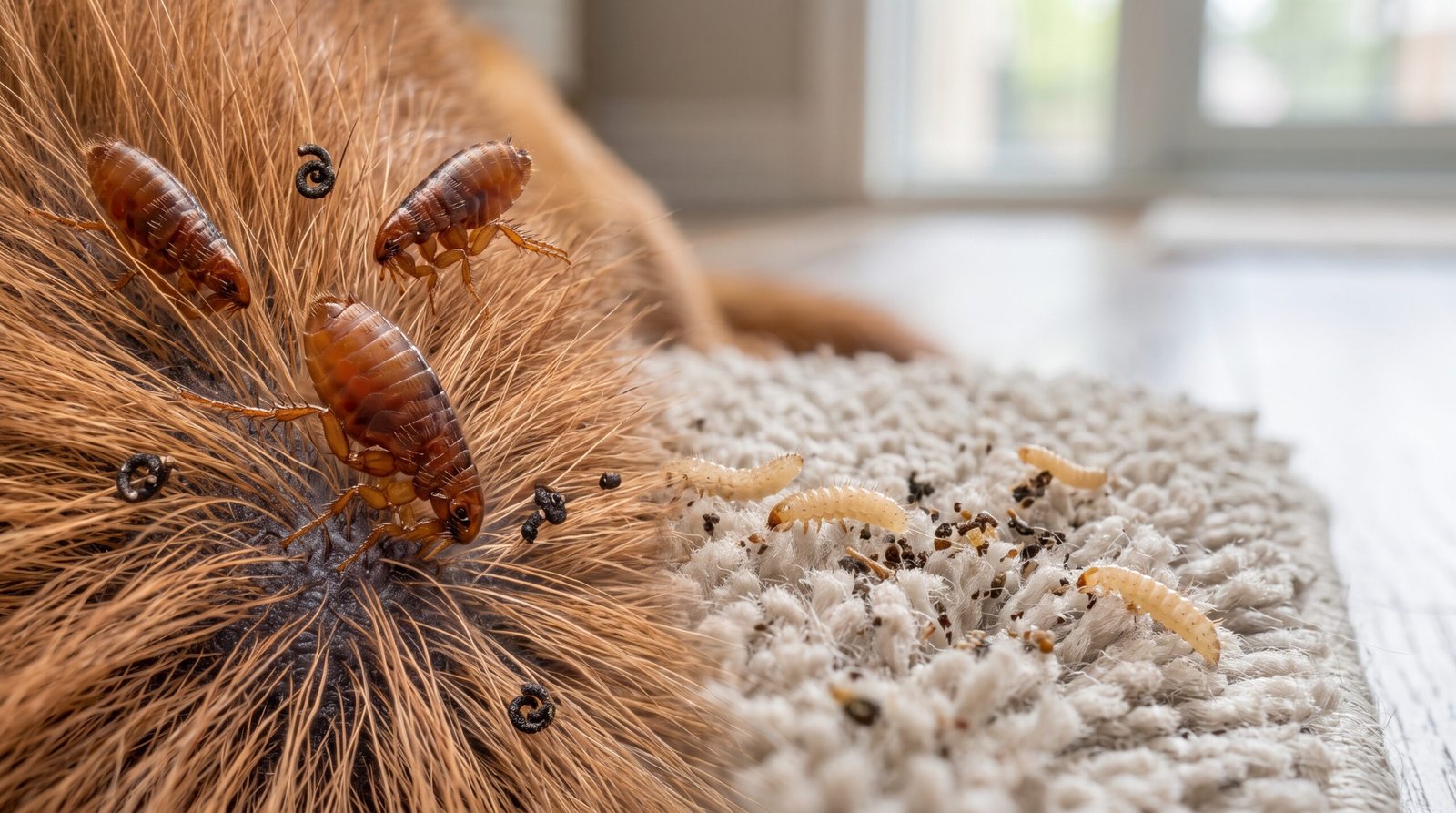
Adult fleas feed exclusively on blood, and both males and females bite, though for slightly different reasons. Male fleas feed primarily for their own survival, while female fleas need a blood meal specifically to produce eggs. Once a flea reaches adulthood and finds a host, feeding typically begins within a few hours, and mating follows shortly after.
Flea larvae, by contrast, don’t feed on blood directly. Instead, they feed on organic debris in their environment, most notably flea dirt, which is the dried fecal matter left behind by adult fleas after a blood meal. This detail matters for control, since adult fleas essentially feed the next generation just by living on a host and shedding waste into the surrounding carpet or bedding.
Flea Life Cycle and Reproduction
Fleas undergo complete metamorphosis through four distinct stages, and understanding each one explains why an infestation is so difficult to eliminate with a single treatment.
- Egg stage – A female flea can lay roughly 20 to 50 eggs per day once she’s mated and fed. Eggs are laid on the host but have no stickiness, so they fall off almost immediately into carpet, bedding, and furniture as a pet moves through the home. Eggs typically hatch within one to ten days, depending on temperature and humidity.
- Larval stage – Hatched larvae are small, pale, worm-like, and actively avoid light, burrowing into carpet fibres, floor cracks, and baseboards. They feed on flea dirt and other organic debris in their environment. This stage can last anywhere from about a week to several months, depending on conditions.
- Pupal stage – Larvae spin a sticky, debris-covered cocoon that camouflages easily into carpet and flooring. Inside, the pupa can remain dormant for weeks or even months, protected from insecticides and environmental changes, waiting for signs of a nearby host such as vibration, warmth, and carbon dioxide.
- Adult stage – Once triggered to emerge, the adult flea seeks a host almost immediately and can begin feeding within hours. Adults typically live a few weeks to a few months under normal indoor conditions, though some can survive close to a year.
This changes depending on the season and the home’s environment. Our technicians usually discover that homeowners treating only visible adult fleas are surprised when the problem returns two or three weeks later, and that’s almost always because the pupal stage survived the first treatment and simply waited it out before emerging.
Flea Behaviour and Seasonal Activity
Fleas are most active in warm, humid conditions, which is why populations in Canada typically peak during summer and early fall. That said, an indoor environment with consistent heating and a resident pet can allow a flea population to persist through winter, even in regions where outdoor populations wouldn’t otherwise survive the cold.
This changes considerably across the country. In milder, more humid areas like coastal British Columbia, fleas can remain active in the environment year-round. In much of the Canadian prairies and northern regions, colder, drier conditions make outdoor flea populations far less common, and most infestations there trace back to an indoor source or a pet that picked fleas up while traveling.
Signs of a Flea Infestation
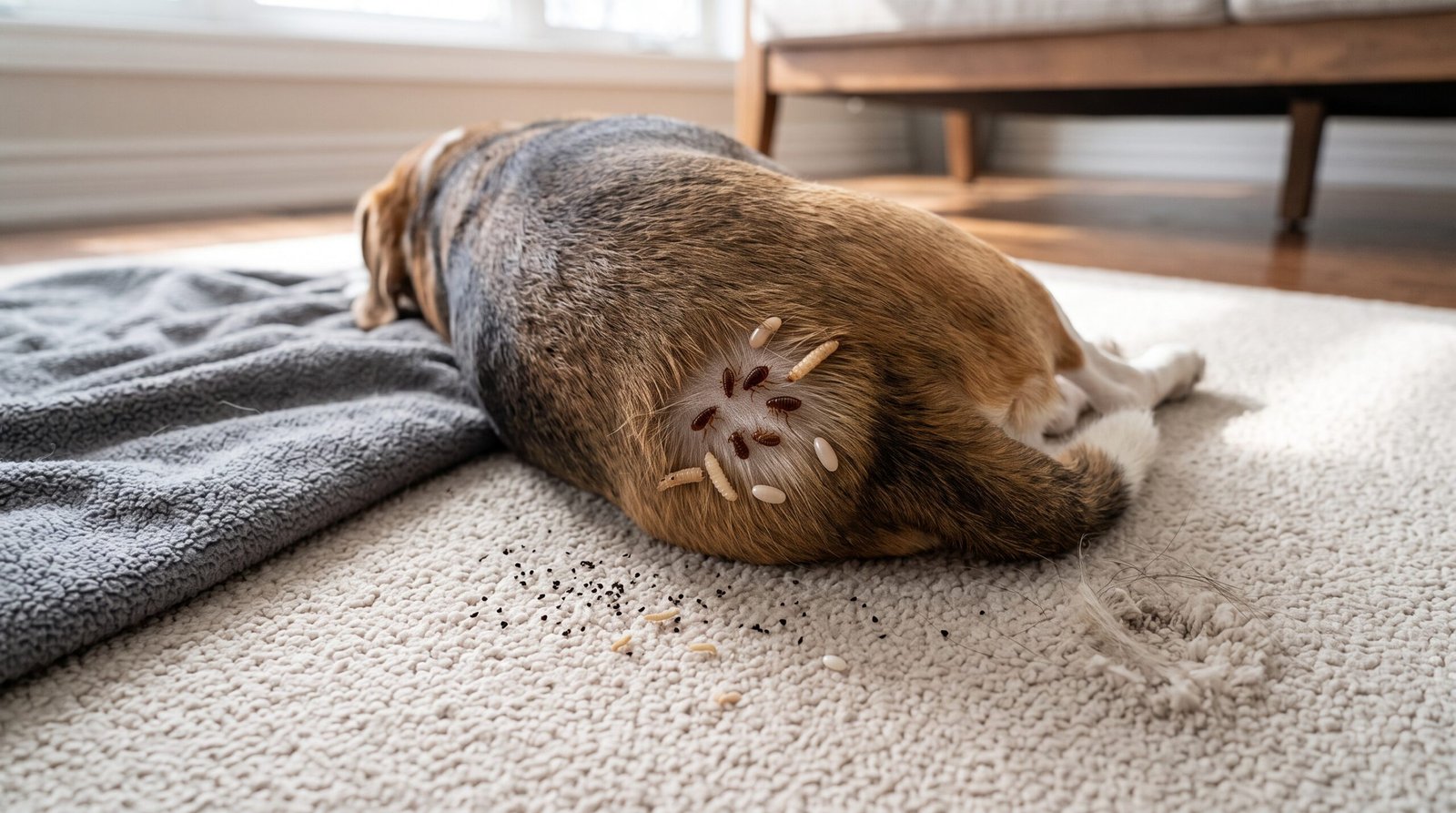
Because adult fleas represent only a small percentage of the overall population at any given time, homeowners need to know what other evidence to look for:
- Pets scratching, biting, or grooming more than usual, particularly around the neck, tail, and hindquarters
- Small, dark specks in a pet’s fur that turn reddish when placed on a damp paper towel, known as flea dirt
- Small, itchy red bumps on your own ankles or legs, especially after time spent on carpet or in a yard
- Visible fleas moving quickly through a pet’s fur, particularly along the back and haunches
- Pets excessively licking or chewing at their skin, which can indicate a flea allergy reaction
A flea comb run through a pet’s coat, particularly along the back, tail, and haunches, is one of the simplest ways to confirm activity, since it often catches both live fleas and flea dirt even when nothing is visible at a glance.
Are Fleas Dangerous to Humans and Pets?
Flea bites cause itching and irritation in both people and pets, and for many animals, that’s the extent of the concern. For some pets, however, flea saliva triggers a hypersensitivity reaction called flea allergy dermatitis, which can cause significant skin irritation, hair loss, and secondary infections from constant scratching, even from a relatively small number of bites.
Fleas are also intermediate hosts for the tapeworm Dipylidium caninum, meaning pets can become infected with tapeworms by ingesting a flea while grooming themselves, which happens more often than most owners realize, particularly with cats. A heavy, untreated infestation on a young, small, or otherwise compromised pet can lead to significant blood loss and related health complications, since fleas are true blood-feeding parasites.
For humans, fleas can bite when a preferred animal host isn’t available, most often around the ankles and lower legs, causing small, itchy red welts. While certain flea species are known to be capable of transmitting disease in specific regions of the world, this isn’t a common concern for typical household infestations in Canada, and the primary risks here remain skin irritation and the tapeworm connection in pets.
How to Prevent Fleas
Prevention comes down to consistent pet protection and reducing the conditions fleas need to establish indoors:
- Use a veterinarian-recommended flea prevention product year-round, not just during warmer months
- Wash pet bedding regularly in hot water
- Vacuum carpets, furniture, and baseboards frequently, paying close attention to areas where pets rest
- Keep grass trimmed and reduce shaded, humid areas in the yard where fleas thrive
- Check pets for fleas after time spent in wooded areas, dog parks, or anywhere wildlife activity is common
- Address any wildlife denning near the home, since fleas can hitch a ride from raccoons, squirrels, or other animals living close to the house
We’ve found that homeowners who maintain flea prevention year-round, rather than only during the summer, avoid the vast majority of infestations we’re called out to treat. Once fleas are established indoors, prevention alone is no longer enough.
How to Get Rid of Fleas
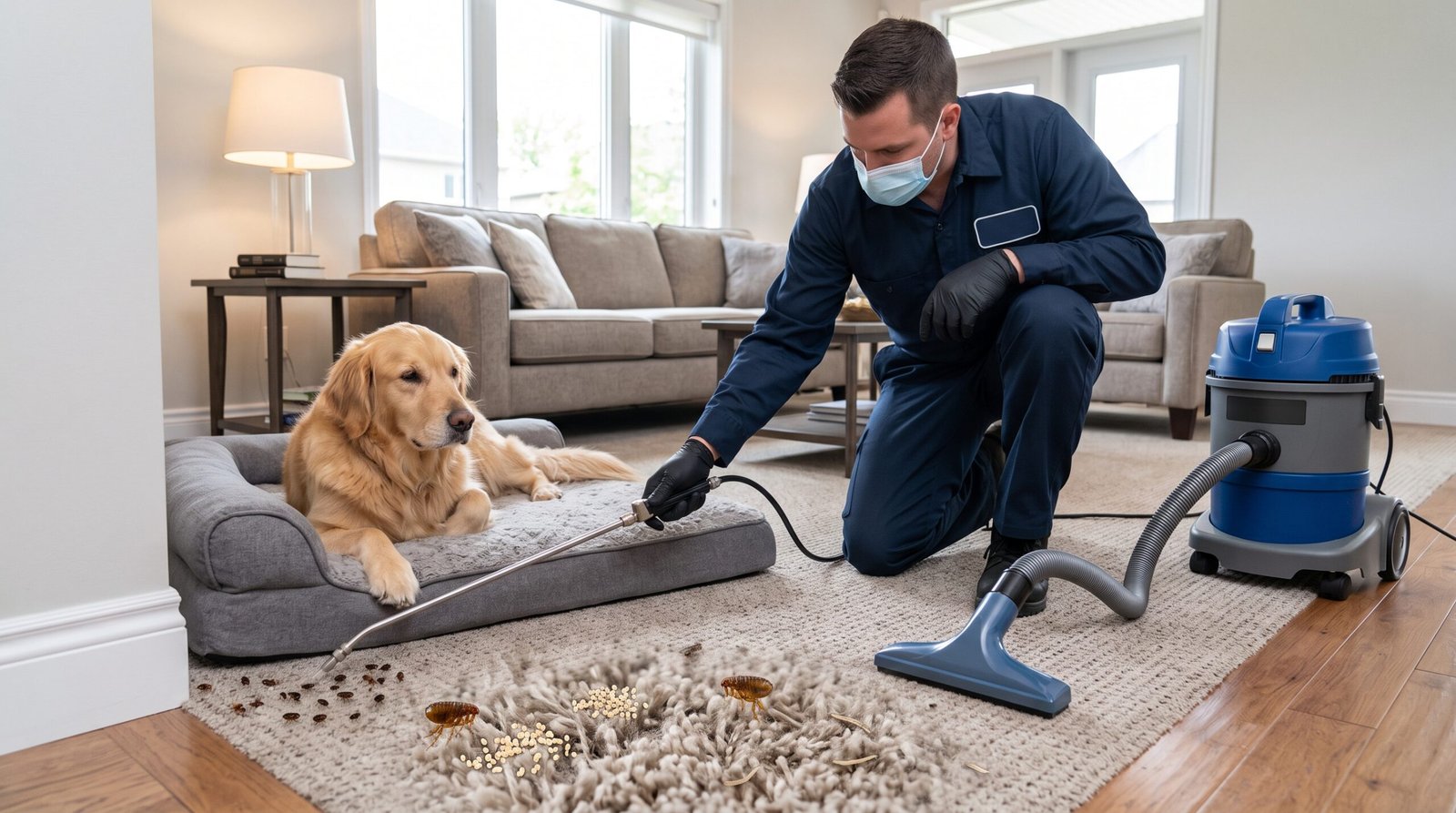
Because so much of the flea population exists off the pet and in the surrounding environment, effective treatment always requires addressing both.
Treating the pet – Veterinary-recommended flea treatments, whether topical, oral, or collar-based, are essential for killing adult fleas and breaking the reproductive cycle at the source. All pets in a household should be treated at the same time, even ones without visible symptoms.
Vacuuming – Thorough, repeated vacuuming of carpets, furniture, and cracks in flooring physically removes eggs, larvae, and some pupae, and is one of the most effective non-chemical steps a homeowner can take. Vacuum bags should be disposed of promptly outside the home.
Washing bedding and fabric – Hot water washing kills fleas at every stage present in pet bedding, blankets, and any washable fabric a pet regularly contacts.
Steam cleaning – Effective against fleas at all developmental stages, since heat penetrates carpet fibres and upholstery more thoroughly than vacuuming alone.
Residual insecticide treatment – Applied to carpets, baseboards, and pet resting areas, targeted treatments reach the eggs, larvae, and pupae hiding in the environment rather than just the adults visible on a pet.
Why DIY Flea Control Often Falls Short
This is one area we’re direct about. Bug bombs and foggers may kill some visible adult and larval fleas, but they rarely penetrate deep enough into carpet fibres or protected pupal cocoons to break the full life cycle. Because pupae can remain dormant and protected for weeks or months, a treatment that looks successful can be followed by a second wave of newly emerged adults a few weeks later, which is exactly the pattern that brings most homeowners to call a professional after trying a store-bought product first.
Professional Flea Removal
Because both fleas and bed bugs bite and cause itchy red marks, homeowners sometimes confuse the two, especially early on. A few details make the difference clear: fleas jump and are usually found on or near pets, while bed bugs don’t jump at all and stay close to sleeping areas regardless of whether pets are present. Flea bites tend to cluster around the ankles and lower legs, while bed bug bites more often appear in a line along the arms, neck, or torso. Correct identification matters here too, since the treatment approach for each is completely different, and mixing up the two can lead to a homeowner treating the wrong problem entirely.
Fleas vs. Bed Bugs: Avoiding a Common Mix-Up
A proper flea treatment plan addresses every stage of the life cycle, not just the adults that happen to be visible on inspection day. Our pest control services combine environmental treatment of carpets, baseboards, and pet resting areas with guidance on pet-specific treatment, since resolving an infestation always requires coordinating both. Because flea eggs and pupae can persist for weeks, a single visit is rarely enough, and most effective flea programs include a follow-up treatment to catch newly emerged adults before they can reproduce again.
If wildlife activity near your home, such as raccoons or squirrels denning in an attic or shed, may be contributing to the problem, it’s worth having a broader wildlife inspection done at the same time, since removing the animal without addressing the fleas left behind often leads to a second infestation shortly after.
Frequently Asked Questions
How do fleas get into a house?
Most often on pets after time outdoors, but also through wildlife denning nearby, secondhand furniture, or contact with an already-infested environment.Most often on pets after time outdoors, but also through wildlife denning nearby, secondhand furniture, or contact with an already-infested environment.
Are fleas harmful to humans and pets?
Yes, to varying degrees. Bites cause itching in both, some pets develop flea allergy dermatitis, and fleas can transmit tapeworms to pets that ingest them while grooming.
How long do fleas live?
Adult fleas typically live a few weeks to a few months, though under ideal conditions some can survive close to a year, and the full life cycle from egg to adult can range from a few weeks to several months.