

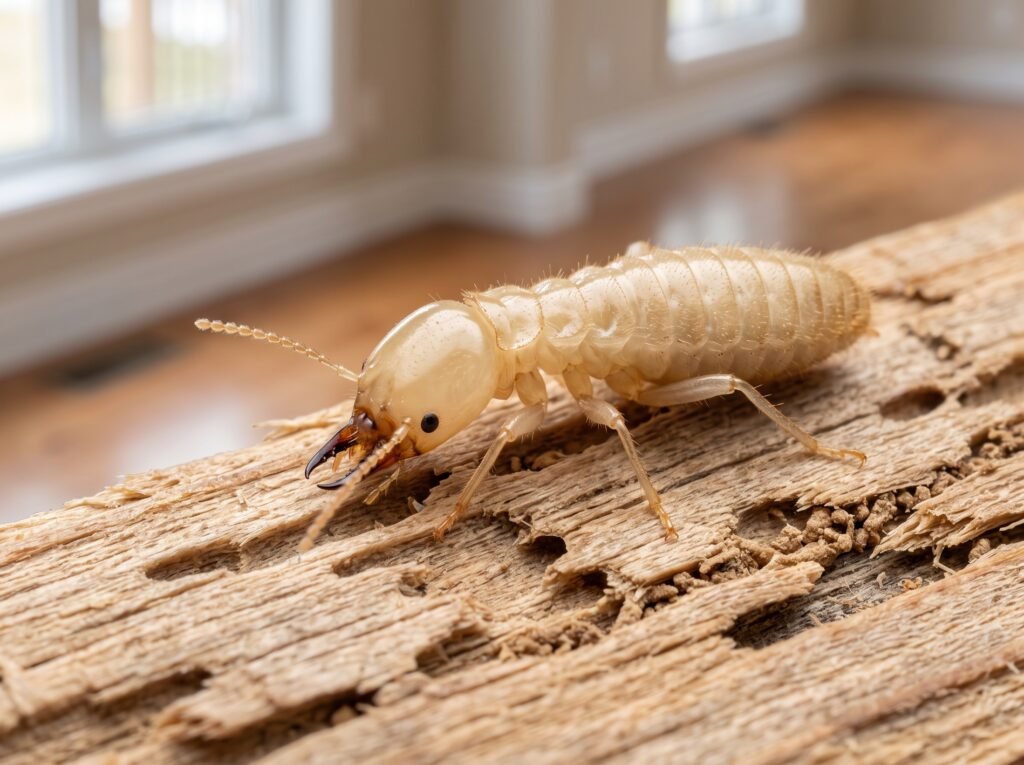
What Is a Termite?
A termite is a small, social insect that feeds on cellulose, the main component of wood and other plant material. Termites are often called “white ants,” but they’re not ants at all. They’re more closely related to cockroaches, and a few clear physical differences separate the two: termites have straight antennae rather than the elbowed antennae of ants, and their bodies lack the narrow, pinched waist that ants have.
Termites live in organized colonies built around castes, meaning each termite has a specific role. In our experience, this is the detail that surprises homeowners most, because a termite problem isn’t a handful of stray insects, it’s an entire underground society working continuously and largely out of sight.
Termite Species Found in Canada
Not every termite species lives in Canada, and knowing which ones do helps explain why some regions face far more risk than others.
- Eastern subterranean termite (Reticulitermes flavipes) – The most significant termite pest in the country, found throughout densely populated parts of eastern Canada, including Toronto, Hamilton, and the Niagara Peninsula.
- Western subterranean termite (Reticulitermes hesperus) – The primary termite pest in British Columbia, particularly around Vancouver, Victoria, and the Okanagan region.
- Pacific dampwood termite (Zootermopsis angusticollis) – Native to coastal BC, this species targets moist, decaying wood and rarely causes serious damage to sound structures.
There are more than 3,100 termite species worldwide, but only a small handful have established themselves in Canada’s colder climate. Long winters keep populations limited to the warmer southern regions, though heated buildings can create ideal conditions even where outdoor populations wouldn’t otherwise survive.
Where Do Termites Live? Habitat and Range in Canada
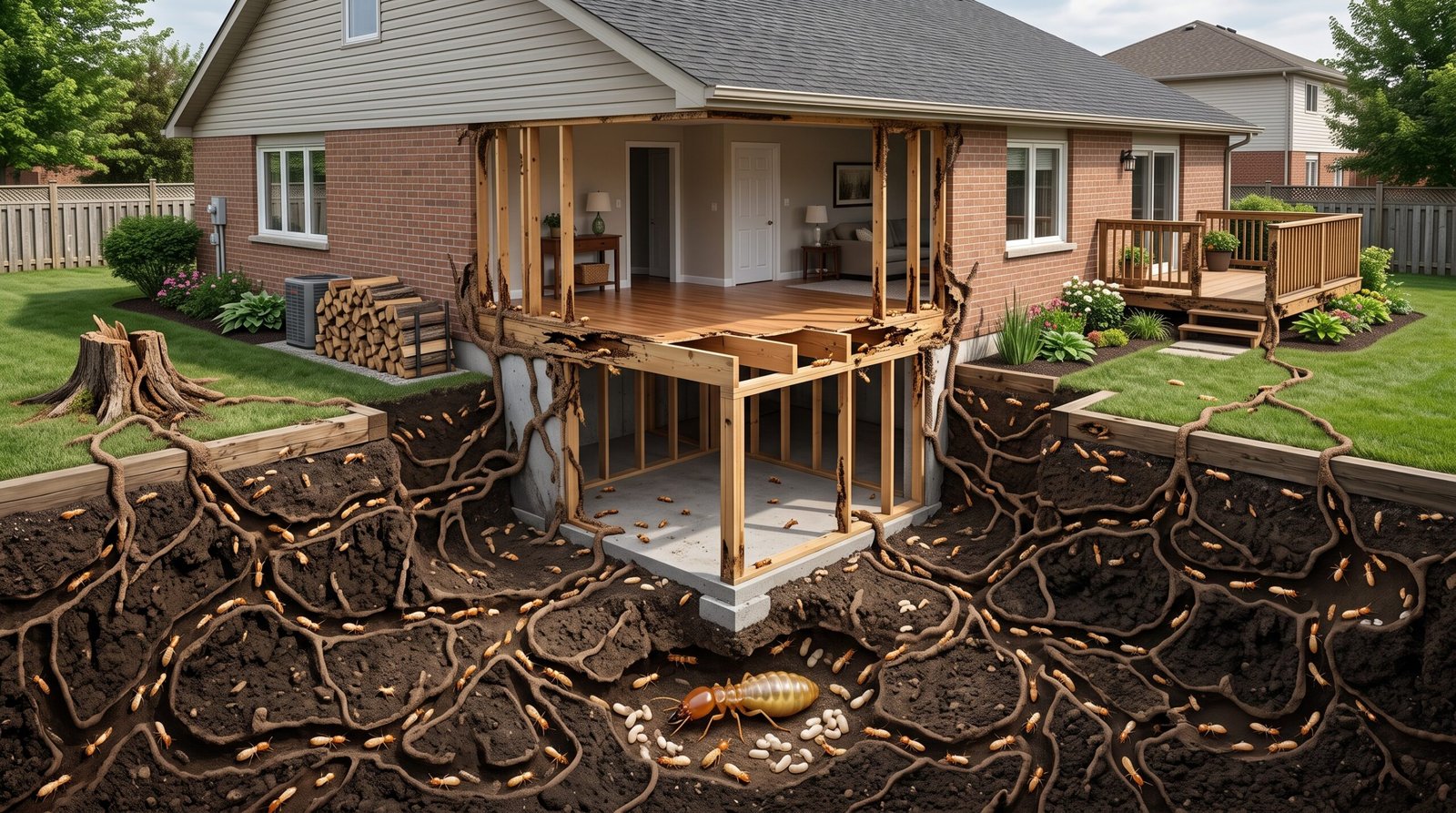
Most of Canada is too cold to support termite colonies, but that protection only extends so far. In Southern Ontario, subterranean termites have been documented in more than 30 localized pockets, with well-known populations around Toronto’s lakeshore, Guelph, Cambridge, Kitchener, and Waterloo. On the west coast, both native species are established across coastal British Columbia, where mild, moist conditions suit them well.
Subterranean termites live underground for most of their lives, in colonies that can range from tens of thousands to as many as two million individuals, depending on the species and how established the colony has become. They need consistent contact with moisture, which is exactly why they build the way they do.
One thing we notice on inspections in known termite areas is how much a colony depends on soil contact. Termites nest in soil or in wood that’s touching the ground, and they build mud shelter tubes along foundations, fences, and tree trunks to travel safely between the colony and a food source without drying out in the open air. If you’ve ever seen a thin line of dried mud running up a foundation wall in a Kitchener or Guelph basement, that’s very likely what you’re looking at.
Termite Life Cycle and Reproduction
A termite colony functions through three main castes, and each stage of the life cycle plays a specific role in keeping the colony running.
- Eggs – Laid by the queen, sometimes at a rate of thousands per year in an established colony. Some colonies even have more than one egg-laying female, which allows populations to grow faster than homeowners often expect.
- Nymphs – Hatch from eggs and develop into workers, soldiers, or future reproductives depending on the needs of the colony.
- Workers – The most numerous caste, responsible for foraging, feeding the colony, and maintaining tunnels and shelter tubes. Subterranean worker termites are small, typically around 6 mm.
- Soldiers – Recognizable by an orange head and elongated mandibles, tasked with defending the colony from predators like ants.
- Reproductives (alates) – Winged termites that leave the colony during a swarm to mate and establish new colonies elsewhere.
Swarming is one of the clearest signs of an active termite population nearby. In early spring, when temperatures rise, winged reproductives take flight together in large numbers, shed their wings shortly after landing, and pair off to start new colonies. Our technicians usually discover that homeowners mistake a spring swarm for flying ants, which delays a proper inspection at exactly the time when catching a new colony early would matter most.
What Do Termites Eat?
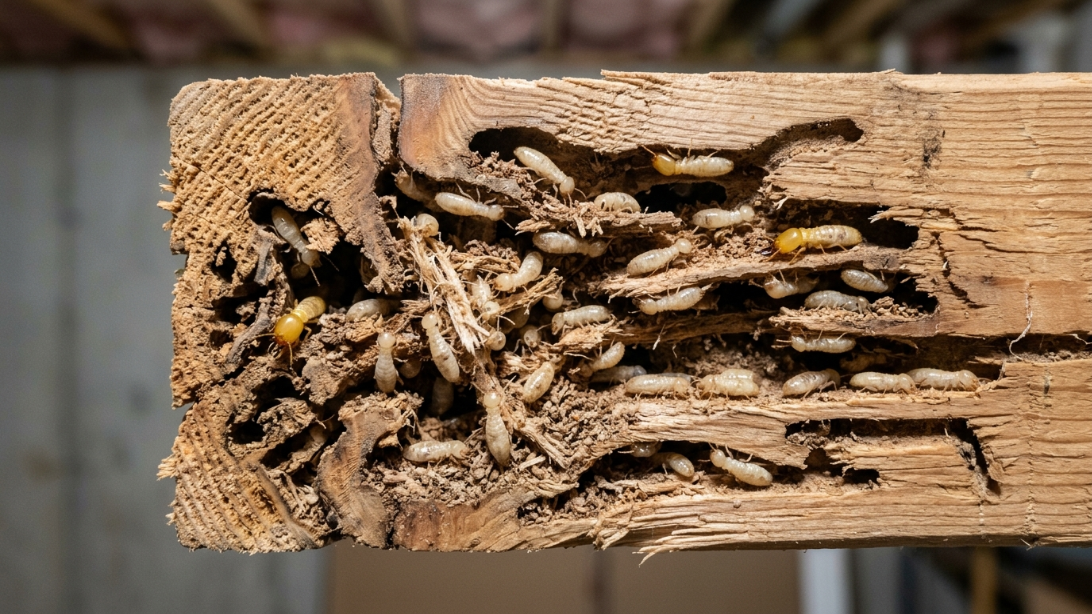
Termites feed on cellulose, and wood is their primary food source, but they aren’t limited to lumber alone. They’ll consume:
- Structural wood, including floor joists, wall framing, and window or door frames
- Furniture, books, and cardboard
- Paper products and fabrics containing plant fibres
- Mulch, tree stumps, and dead or decaying wood in the yard
- Wood chips and landscaping material in direct contact with soil
Termites can also tunnel through materials they don’t actually eat, including rigid foam insulation, soft plastics, and even plaster, simply because it’s in their path. This is one of the reasons termite damage can extend beyond what most homeowners expect from an insect that technically only eats wood.
Termite Behaviour and Seasonal Activity
Subterranean termites are active year-round underground, where soil insulates them from Canadian winters, but visible activity follows a clear seasonal pattern. Swarming typically happens in early spring, often after a rain, when conditions are warm and humid enough for reproductives to fly safely. Outside of swarming season, colonies continue foraging and feeding quietly, which is exactly why so much damage happens before anyone notices a problem.
This changes depending on the species. Dampwood termites on the coast are drawn specifically to consistently moist, decaying wood, and their presence is usually a sign of an existing moisture problem rather than a standalone infestation. Subterranean termites, by contrast, will actively seek out sound structural wood as long as it stays in contact with soil or a reliable moisture source.
Signs of a Termite Infestation
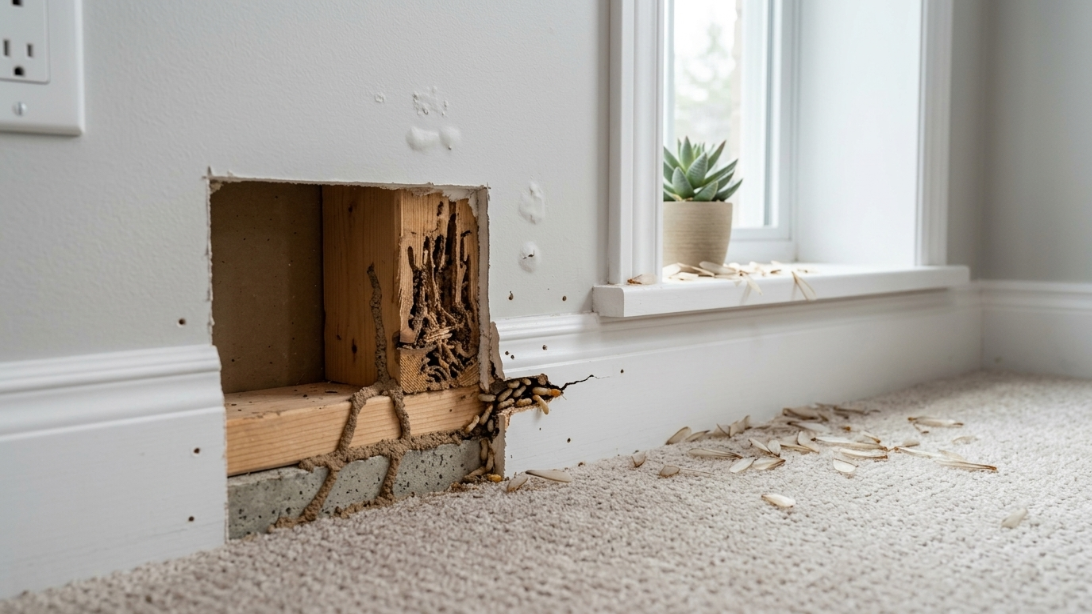
Because termites rarely appear out in the open, homeowners need to know the physical evidence they leave behind. Watch for:
- Mud shelter tubes running along foundation walls, fences, or tree trunks
- Wood that sounds hollow when tapped
- Spotted, striped, discoloured, or warped wood surfaces
- Bubbling or blistering paint on wooden trim
- Piles of discarded wings near windowsills or doors after a swarm
- Small pinpoint holes or frass (termite droppings) near infested wood
One mistake we see repeatedly is a homeowner assuming a few piles of shed wings were just a one-time bug problem, when in reality it was a swarm event marking the start of a brand-new colony nearby. If you’re finding any of these signs, especially in a basement, garage, or crawl space, it’s worth having a proper inspection rather than waiting to see if anything develops further.
How Termites Get Into a Home
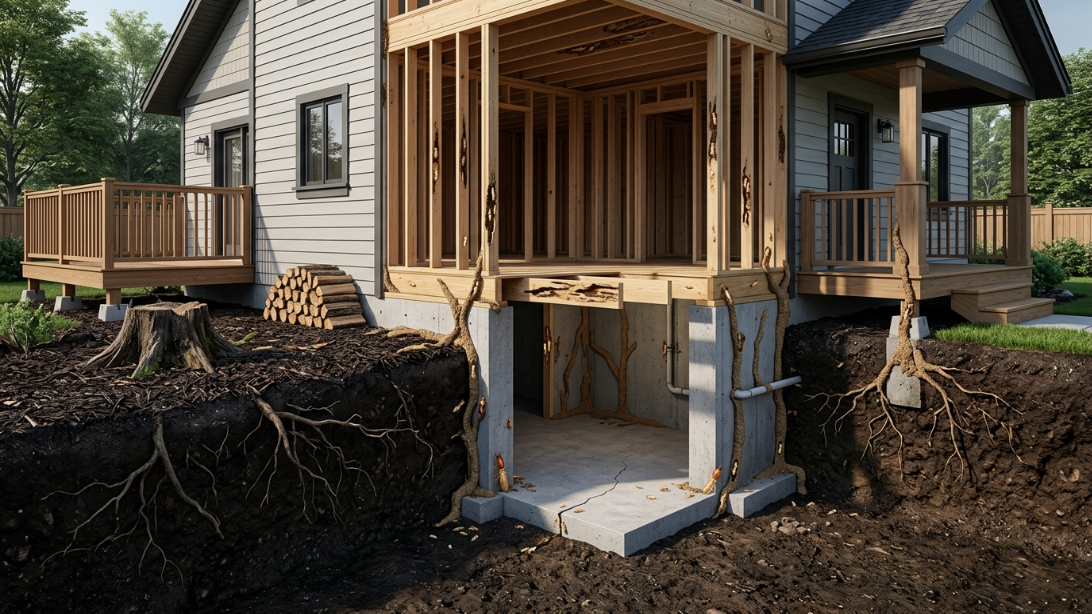
Termites don’t chew through solid concrete, but they’re patient enough to find their way around it. Common entry points we come across during inspections include:
- Cracks in foundation walls as narrow as 1.5 mm, which is more than enough space for worker termites to pass through
- Wood siding, deck posts, or porch supports that sit directly on or close to soil
- Expansion joints, utility penetrations, and gaps around plumbing where it enters the foundation
- Wooden steps, fence posts, and landscaping structures touching the ground next to the house
- Firewood, lumber, or wood mulch stored against an exterior wall
Because subterranean termites need soil contact to survive, they’ll often build shelter tubes directly over inert materials like concrete just to reach a promising piece of wood on the other side. This is part of why we always tell homeowners that a termite problem in the yard is really a termite problem waiting to happen indoors, even if the house itself looks completely untouched.
Termite Damage and What It Costs to Fix
Termite damage tends to be gradual and hidden, which is exactly what makes it expensive by the time it’s discovered. A colony feeding steadily on floor joists, sill plates, or wall studs for months or years can hollow out structural wood while leaving the surface looking mostly intact, since termites tend to feed from the inside out.
A few factors affect how much a termite problem ends up costing a homeowner:
- How long the colony has been active before detection
- Whether the damage is limited to non-structural elements or has reached load-bearing wood
- The size and accessibility of the property, including crawl spaces, decks, and additional structures
- Whether treatment addresses only the current infestation or also includes prevention measures for the future
Repair costs are separate from treatment costs, and in our experience, homeowners are often more surprised by the repair bill than the treatment itself. This is exactly why catching a termite problem early, before it reaches structural framing, makes such a meaningful difference to the final cost.
Termites vs. Carpenter Ants
Because both insects damage wood and both produce winged reproductives, termites are frequently confused with carpenter ants. A few details make the difference clear:
- Termite wings are all the same length; carpenter ant wings are uneven, with the front pair longer than the back
- Termites have straight antennae; ants have bent, elbowed antennae
- Termites lack a narrow waist; ants have a distinctly pinched waist
- Carpenter ants push out clean piles of wood shavings as they tunnel; termites leave mud-packed tunnels and don’t remove debris the same way
Getting this identification right matters, because the treatment approach for each pest is completely different. We’d rather a homeowner send us a photo before treating anything than guess and use the wrong method entirely.
Health Risks of Termites
Termites aren’t known to bite people, sting, or spread disease to humans, which sets them apart from many other household pests. Their risk is almost entirely structural rather than medical. That said, an active infestation can compromise the integrity of floor joists, wall framing, and support beams over time, and left unaddressed for long enough, the damage can become a genuine safety concern rather than just a costly repair.
How to Prevent Termites
Prevention comes down to limiting the moisture and wood contact that termites depend on:
- Keep firewood, lumber, and mulch stacked off the ground and away from the foundation
- Fix leaky pipes, gutters, and downspouts promptly to reduce soil moisture near the house
- Remove tree stumps, dead trees, and old wood retaining walls from the yard
- Avoid wood mulch directly against the foundation; consider alternatives that don’t feed termites
- Ensure soil grading directs water away from the home rather than pooling near the foundation
- Schedule a professional inspection if you live in a known termite zone, even without visible signs
We’ve found that most successful prevention comes down to yard maintenance more than anything done inside the house. Termites forage through soil before they ever reach a structure, so removing what attracts them outside is often the most effective first step.
How to Get Rid of Termites: Treatment and Control
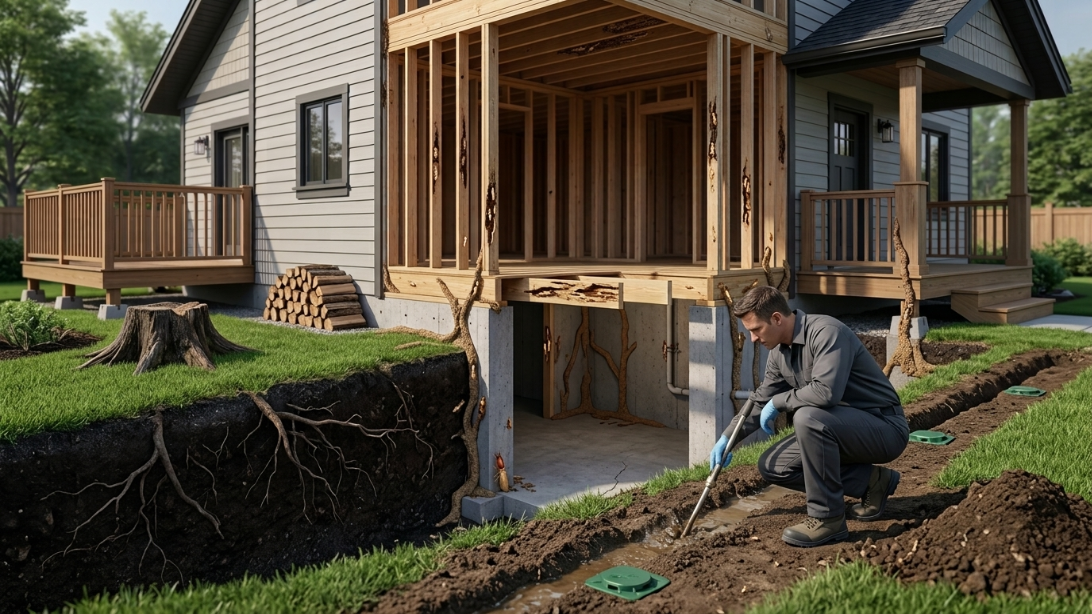
Liquid soil treatments – A termiticide applied to the soil around and beneath a structure creates a treated barrier that kills termites attempting to cross it, and can also be transferred back to the colony through contact between individuals.
Bait stations – Placed strategically around a property, bait stations use slow-acting substances that worker termites carry back to the colony, gradually spreading through grooming and feeding behaviour until it affects the broader population, including the queen.
Physical and construction-based prevention – Separating wood from soil contact, using treated lumber, and sealing entry points are long-term measures that reduce the conditions termites need to establish a colony in the first place.
Structural repair – Addressing existing damage is a separate step from eliminating the colony, and it typically follows treatment rather than replacing it.
Why DIY Termite Control Rarely Works
This is one area we’re direct about with homeowners. Over-the-counter sprays only kill termites they directly contact, and they do nothing for the much larger population still active underground. Termite colonies can number in the hundreds of thousands, and treating the visible symptoms without addressing the colony itself tends to just push activity elsewhere on the property rather than resolving it.
Professional Termite Removal
A proper termite inspection involves checking basements, crawl spaces, garages, decks, and the perimeter of the foundation, using tools like a flashlight and a flat-edge screwdriver to probe suspect wood for hollow spots. Our technicians build a treatment plan around the species involved, the extent of the colony, and the construction of the home, since a slab foundation, a basement, and a crawl space each require a different approach.
If you’re located in a known termite zone in the GTA and haven’t had an inspection in the last few years, it’s worth booking one, even without visible signs. Our pest control services include termite-specific inspections designed to catch activity early, before it reaches the point of structural repair. If you’re dealing with a suspected infestation alongside other pest activity in the home, a broader home and wildlife inspection can help rule out overlapping issues, which is common in older properties throughout the region.
Frequently Asked Questions
Can termites be treated without professional help?
Store-bought products only affect termites they directly touch and don’t reach the colony itself, which is why most termite infestations require professional soil treatment or baiting to fully resolve.
Do termites cause health problems?
Termites don’t bite or sting people and aren’t known to spread disease. Their risk is structural, not medical, though extensive damage can eventually become a safety concern.
How do I know if I have a termite infestation?
Look for mud shelter tubes along the foundation, hollow-sounding wood, discarded wings after a swarm, and discoloured or warped wood surfaces, particularly in basements and crawl spaces.
Lorem ipsum dolor sit amet, consectetur adipiscing elit. Ut elit tellus, luctus nec ullamcorper mattis, pulvinar dapibus leo.