

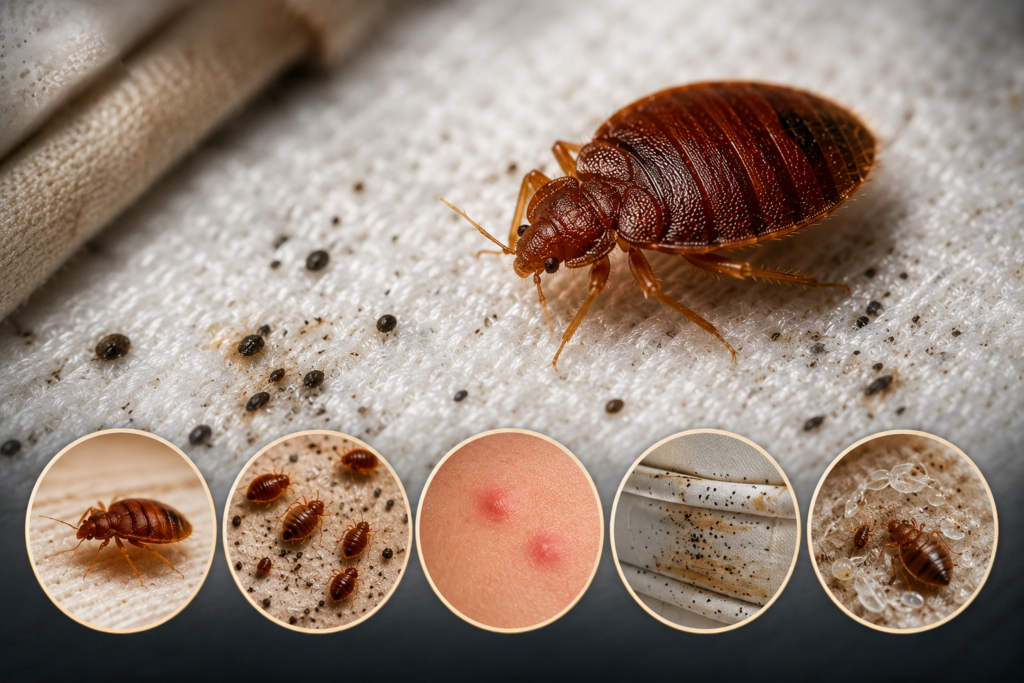
If you’ve woken up with unexplained bites, or you’ve spotted tiny rust-coloured spots along your mattress seams, you’re probably here for one reason: you want to know if you’re dealing with bed bugs, and what to do about it. After years of inspecting bedrooms, hotel rooms, and apartments across Toronto and the GTA, we can tell you this is one of the most misunderstood pests homeowners run into. There’s a lot of conflicting information online, so let’s slow down and go through everything you actually need to know, from what a bed bug is, to how it got into your home, to what actually gets rid of it.
What Is a Bed Bug?

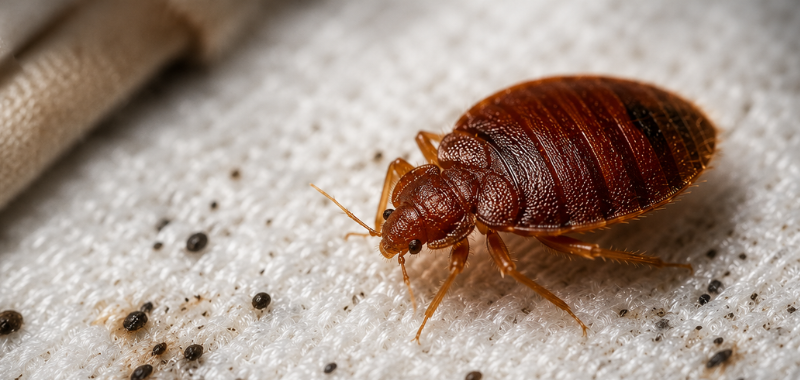
A bed bug is a small, flat, wingless insect that survives entirely on blood. The species most commonly found in Canadian homes is Cimex lectularius, often called the common bed bug. They’re reddish-brown, oval-shaped, and roughly the size of an apple seed once fully grown, measuring around 4 to 5 mm long.
Bed bugs are classified as “true bugs,” a scientific grouping that includes a distinct beak used for feeding, four-part antennae, and short golden hairs across the body. They don’t jump, and they don’t fly. They also can’t easily climb metal or polished surfaces. Instead, they move by crawling, and they’re remarkably efficient hitchhikers, which is exactly how they end up in homes that are otherwise spotless.
One thing we notice on almost every inspection is how surprised homeowners are that bed bugs have nothing to do with a dirty house. Their presence has little to do with the cleanliness of a home, although clutter does give them more places to hide, which makes an infestation harder to find and control. This is one of the biggest myths we run into on service calls, and it’s usually the first thing we clear up before we even start the inspection.
Health authorities, including the EPA, CDC, and USDA, all classify bed bugs as a public health pest, even though they aren’t known to spread disease the way mosquitoes or ticks do. Their real impact is on comfort, sleep, and peace of mind, which is part of why an infestation feels so much more stressful than most other household pests.
The Bed Bug Life Cycle
Understanding how a bed bug develops helps explain why an infestation can grow so quickly once it’s established. A bed bug goes through six life stages total: an egg stage, five nymph stages, and adulthood.
- Egg stage – A female bed bug lays at least 200 eggs over her lifetime, at a rate of roughly two to four per day, and eggs usually hatch within six to seventeen days.
- Nymph stages – A newly hatched nymph is pale, nearly translucent, and about 1.5 mm long. A bed bug needs at least one blood meal before it can move to the next of its life stages, and it must molt its skin at every stage along the way.
- Adulthood – Once fully grown, adults are reddish-brown and roughly the size of an apple seed. Adults typically live around 10 months, though they can survive over a year in a home with favourable conditions, particularly temperatures between 21°C and 28°C.
Under favourable conditions, a bed bug can go from egg to egg-laying adult in as little as four to five weeks, which is exactly why a small, unnoticed problem can turn into a full infestation within a couple of months. This is one of the reasons we always recommend a
What Do Bed Bugs Look Like? Identifying Each Stage
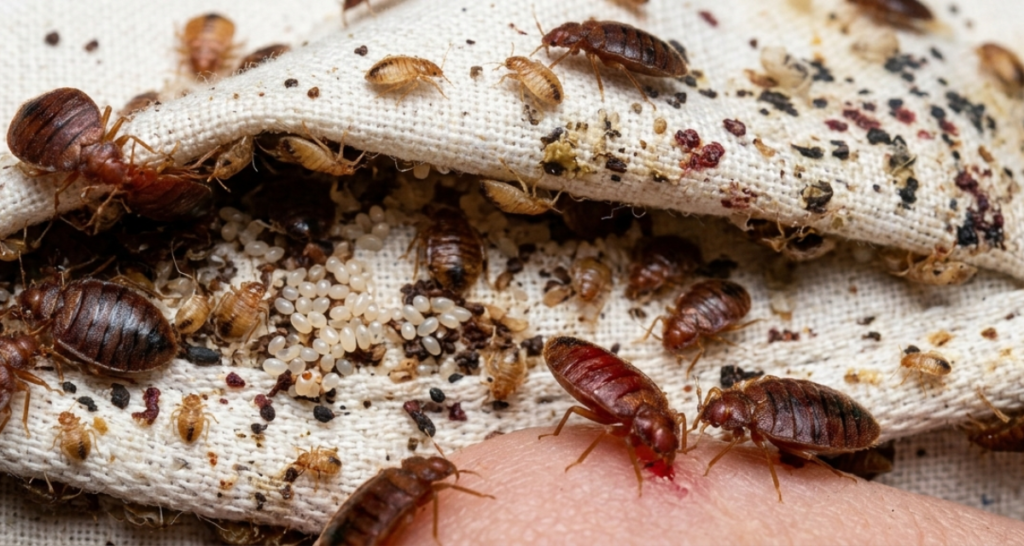
Bed bugs look different at each stage of life, and homeowners often mistake one stage for an entirely different insect, or dismiss a nymph because it doesn’t match the picture of an adult bed bug they searched online.
- Eggs – Tiny, pearly-white, and about the size of a pinhead, coated in a sticky substance and tucked into cracks and seams. They’re almost impossible to spot without a flashlight and a close inspection.
- Nymphs – Pale and small in the earliest stages, darkening gradually with each molt as they feed and grow.
- Adults – Reddish-brown, flat, and oval, with a body about the size of an apple seed. After feeding, their bodies swell and darken to a deeper red, almost blood-coloured.
Adult bed bugs average around 5 mm in length, with an oval, flattened body shape. That flattened shape is exactly why they can squeeze into places most homeowners would never think to check, and it’s a detail we point out on nearly every inspection we do.
Where Do Bed Bugs Hide?
This is usually the question we get asked most on a first visit. Bed bugs are experts at staying out of sight during the day, which is why finding them takes a trained eye and a methodical approach rather than a quick glance at the mattress.
Common hiding spots include:
- Mattress and box spring seams, piping, and tags
- Cracks in bed frames, headboards, and nightstands
- Behind baseboards, outlet covers, and loose or peeling wallpaper
- Inside couch cushions, chair seams, and the folds of curtains
- Drawer joints and the underside of furniture
- Where the wall meets the ceiling, especially in cluttered rooms
- Behind picture frames, mirrors, and wall hangings
Since bed bugs are only about the width of a credit card, they can squeeze into remarkably small hiding spots — if a crack is wide enough to hold a credit card, it’s wide enough to hide a bed bug. After inspecting hundreds of bedrooms, we’ve learned to check the piping around a mattress seam before anywhere else, simply because that’s where an infestation usually starts before it spreads outward.
Bed bugs also tend to stay close to where they feed. They prefer to hide near their food source and will return to the same hiding spot repeatedly, which is part of why the area right around the bed almost always shows the first physical signs, even if the infestation has already begun spreading to nearby furniture.
What Do Bed Bugs Eat?
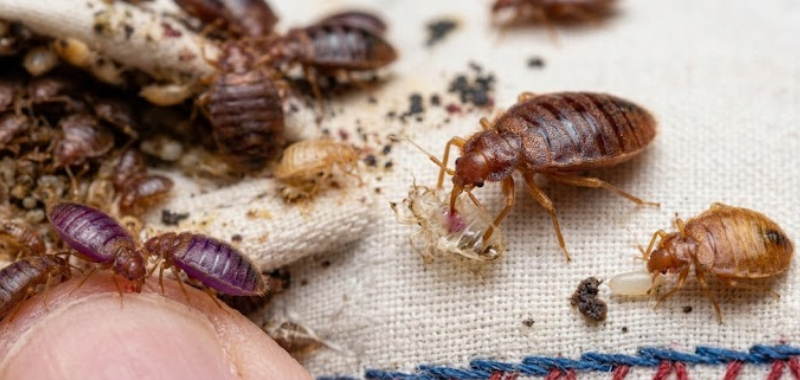
Bed bugs feed on blood, and human blood is their preferred source, though they’ll feed on pets when a human host isn’t available. They come out at night, drawn by the carbon dioxide people exhale while sleeping. A single feeding typically takes three to ten minutes, and because their bite includes a mild anesthetic, most people never feel it happen in the moment.
What makes bed bugs particularly difficult to eliminate is how long they can survive between meals. They can live from several weeks up to a year and a half without feeding, and older bed bugs can go even longer without a blood meal. This is why a home can seem bug-free for months, only for an infestation to reappear once someone returns from travel or new furniture comes through the door. Our technicians usually discover that homeowners assumed the problem was gone simply because the bites had stopped, when in reality the bed bugs had just gone dormant while waiting for their next opportunity to feed.
Why Do Bed Bugs Come Into a House?
Bed bugs don’t fly or jump their way into a home. They arrive as passengers, and they’re very good at it. Common sources we see repeatedly on inspections include:
- Luggage after a hotel stay, flight, or road trip
- Secondhand furniture, particularly mattresses, couches, and box springs
- Used clothing or textiles purchased without washing first
- Visitors’ bags, coats, or backpacks brought into the home
- Shared laundry facilities and hallways in apartment buildings
- Public transit, movie theatres, and other high-traffic seating areas
Bed bugs enter homes by hiding in the cracks and crevices of incoming luggage, furniture, clothing, pillows, boxes, and other objects. One mistake we see repeatedly is a homeowner bringing home a “great find” from a curb or secondhand shop without inspecting it first. That single decision is behind a large share of the infestations we’re called out to treat, and it’s a habit worth changing regardless of how clean an item looks.
Multi-unit buildings present their own challenge. Because bed bugs can travel through shared walls, electrical outlets, and hallways, a single infestation in one apartment can spread to neighbouring units if it isn’t addressed quickly. If you live in a condo or apartment in Toronto, it’s worth letting your building management know as soon as you suspect a problem, since a coordinated response is usually far more effective than treating one unit in isolation.
What Do Bed Bug Bites Look Like?
Bed bug bites are small, red, and often slightly raised, and they tend to appear in a line or cluster on exposed skin like the arms, neck, face, and legs. A bite can take up to 14 days to appear, depending on the person, and some people don’t react to bites at all.
Because reactions vary so much from person to person, bites alone are not a reliable way to confirm bed bugs. Bites can easily be confused with mosquito bites, rashes such as eczema, or even hives. This is why we always tell homeowners to look for physical evidence in the room rather than relying on skin marks alone. A rash on its own isn’t proof, and neither is the absence of one.
It’s also worth mentioning the impact an infestation can have beyond the physical bites. Some people living in infested homes report mental health impacts, including anxiety and difficulty sleeping, and it’s worth speaking with a health care provider if you’re experiencing these symptoms. We’ve worked with homeowners who were far more stressed by the idea of bed bugs than by the bites themselves, and that reaction is completely understandable. Getting a confirmed diagnosis and a clear treatment plan tends to bring a lot of relief on its own.
How to Get Rid of Bed Bugs
This changes depending on how established the infestation is, but effective treatment generally falls into a few categories.
Physical control methods – Steam cleaning, vacuuming, heat, freezing, and washing are all physical methods used to control bed bugs, with steam cleaning typically done first to flush bugs out of hiding before vacuuming. Washing bedding and clothing in hot water, then drying on the highest heat setting, is one of the most effective steps a homeowner can take on their own while waiting for professional treatment.
Heat treatment – Whole-room or whole-home heat treatment raises the temperature high enough to kill bed bugs at every life stage, including eggs. Bed bugs die once their body temperature reaches 45°C, but a room needs to be heated well beyond that to ensure the heat reaches every hiding spot, no matter how well hidden. This is one of the more reliable professional methods, since it reaches areas that sprays often miss entirely.
Chemical treatment – Only pesticides registered by Health Canada should ever be used, and strictly according to the label. This is one area we’re firm about: homemade or unregistered products can be dangerous, and they often push bed bugs deeper into hiding rather than eliminating them.
Professional bed bug treatment – Once an infestation is confirmed, a combined approach using inspection, targeted treatment, and follow-up monitoring gives the most reliable results. Our technicians usually discover that homeowners have already tried a store-bought spray by the time we’re called, which can actually make bugs scatter into new areas of the home and complicate treatment.
DIY vs. Professional Treatment: What We've Learned
We’re not opposed to homeowners trying reasonable first steps, like washing bedding on high heat or vacuuming thoroughly. Where things tend to go wrong is when DIY sprays are used as the only line of defence. Many populations of bed bugs have developed resistance to common insecticides, which means a spray that worked in one home may have little effect in another. A professional inspection identifies exactly where bed bugs are hiding before any treatment begins, which is the difference between treating the whole problem and only treating what’s visible on the surface.
What Kills Bed Bugs Instantly?
No single method eliminates an entire infestation instantly, despite what some products claim. Heat above 45°C is lethal to bed bugs at every stage, and steam applied directly to a hiding spot kills on contact. Bed bugs die at 50°C, and steam cleaners generally produce steam at 100°C or higher. The real challenge isn’t killing the bugs you can see, it’s reaching every hiding spot in a room, which is why DIY treatments so often fail to fully resolve an infestation even when they seem to work at first.
How to Prevent Bed Bugs
Prevention comes down to inspection habits, especially around travel and secondhand items:
- Inspect hotel mattress seams, headboards, and luggage racks before unpacking
- Keep luggage off the bed and floor while travelling, and use a luggage rack when available
- Wash and dry travel clothing on high heat as soon as you return home
- Inspect secondhand furniture thoroughly before bringing it into the house
- Use a protective mattress and box spring encasement
- Reduce clutter near the bed, since it gives bed bugs more places to hide
- Vacuum bedrooms and furniture regularly, paying close attention to seams and edges
We’ve found that homeowners who make hotel inspections part of their travel routine rarely deal with a bed bug problem at home, even if they travel frequently. It’s a small habit that makes a real difference, and it takes less than two minutes once you know what to look for.
When to Call a Professional
A single bed bug sighting doesn’t automatically mean an infestation, but it should never be ignored. If you’re finding shed skins, fecal spotting, or multiple live bugs, or if store-bought sprays haven’t resolved the problem, it’s time to bring in a licensed technician. Our pest control services start with a full inspection, so you know exactly what you’re dealing with before any treatment begins.
If you’re also noticing activity in the attic, walls, or crawlspace alongside a suspected bed bug issue, it’s worth having a broader wildlife and pest inspection done at the same time, since overlapping issues aren’t uncommon in older GTA homes, particularly ones with older insulation or exterior gaps.
If you rent your home, it’s worth knowing that landlords generally share responsibility for addressing an infestation. Speaking with your landlord or property manager early tends to lead to a faster, more coordinated resolution than trying to handle it alone.
What causes bed bugs?
Bed bugs are introduced into a home through travel, secondhand furniture, or contact with an already-infested space. They are not caused by poor housekeeping
What are the early signs of bed bugs?
Rust-coloured stains on sheets, small dark fecal spots, shed skins, tiny pearly eggs in seams, and a musty odour in more established infestations.
How long do bed bugs live?
Adults typically live around 10 months, but can survive over a year under favourable conditions, and nymphs can go months without feeding while waiting for their next meal.
Can bed bugs live in clothes and mattresses?
Yes. Both are common hiding spots, particularly along seams, folds, and tags, which is why washing on high heat and using a mattress encasement are effective prevention steps.